The Wells Area Improvement Project is underway. The Project has two major elements:
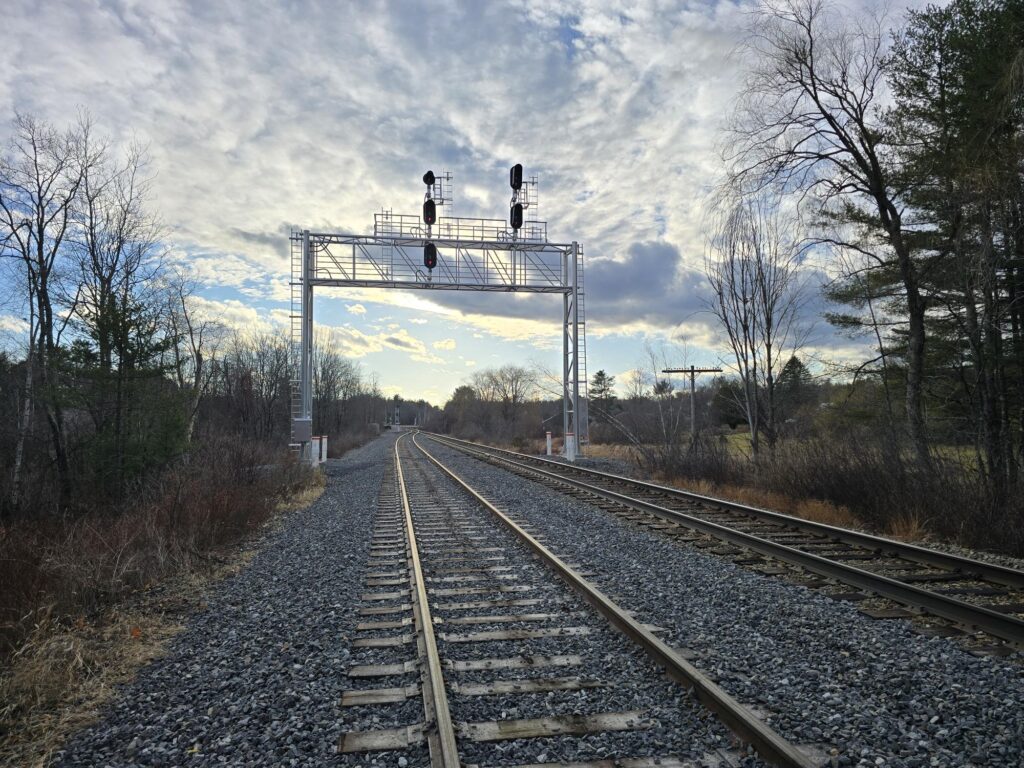
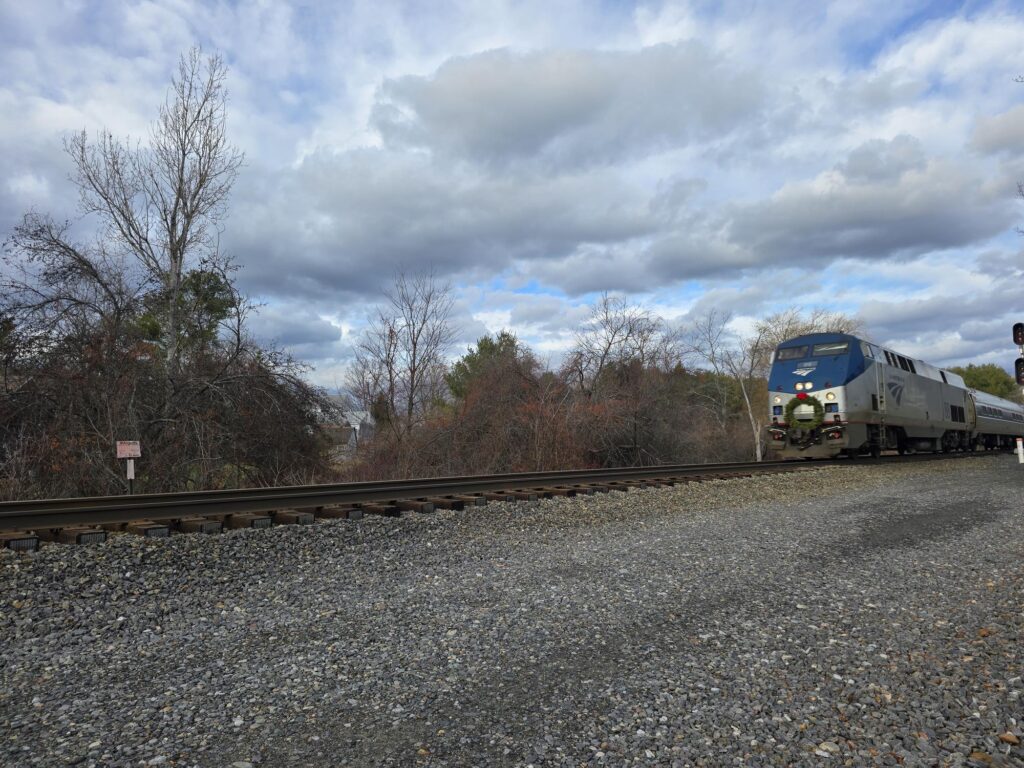
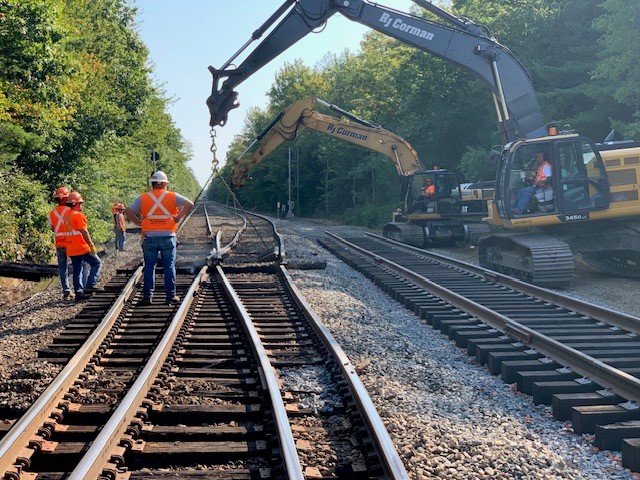
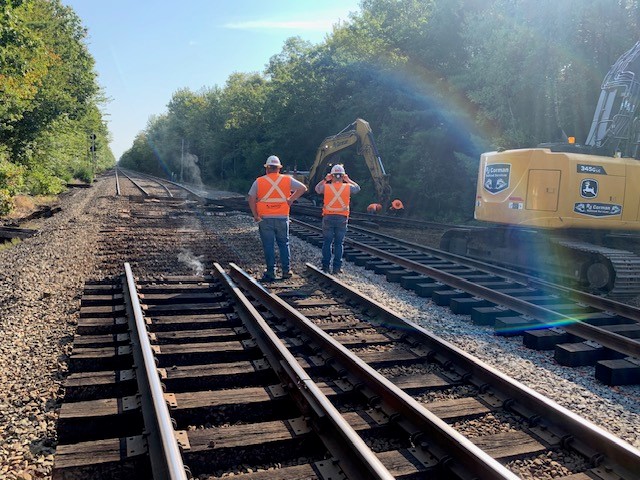
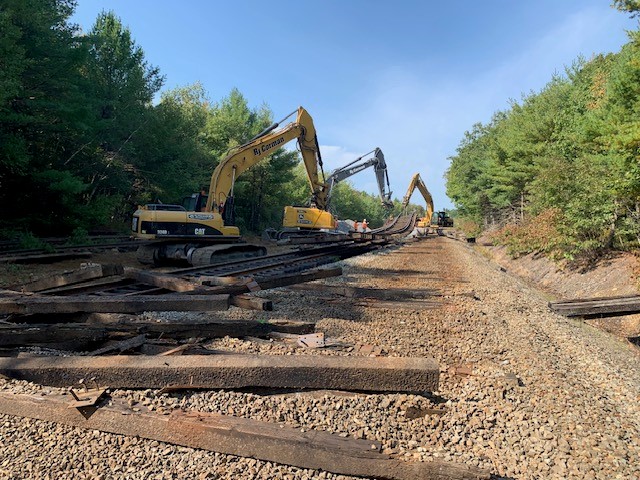
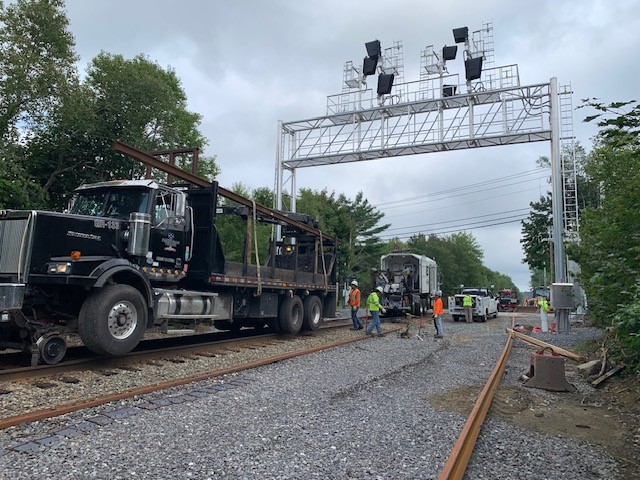
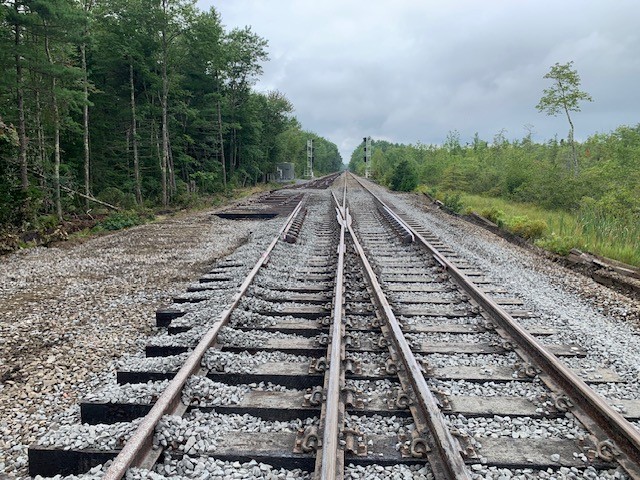
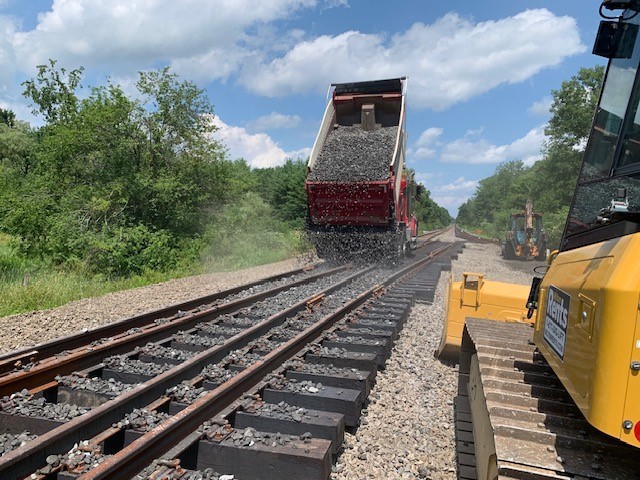
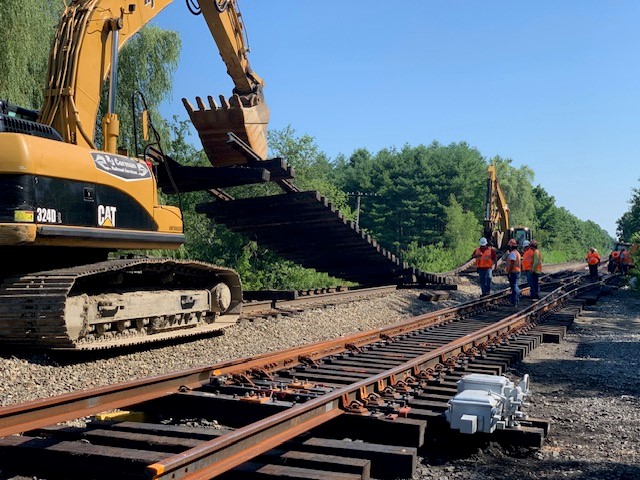
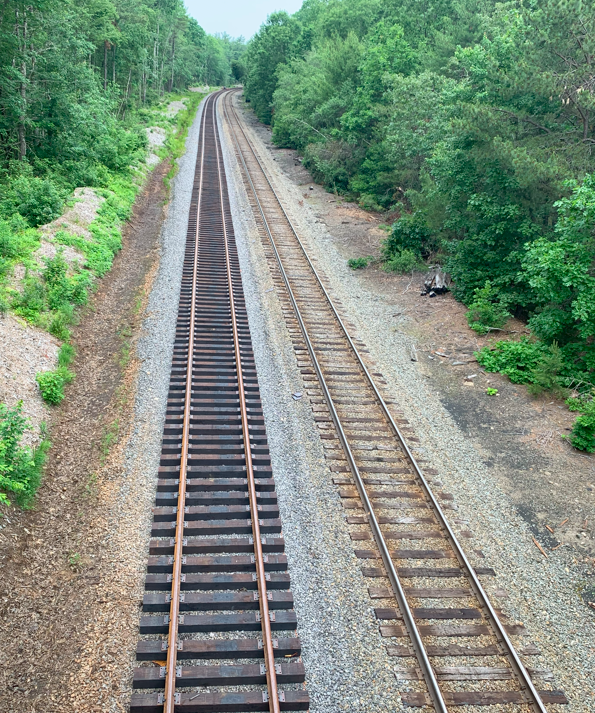
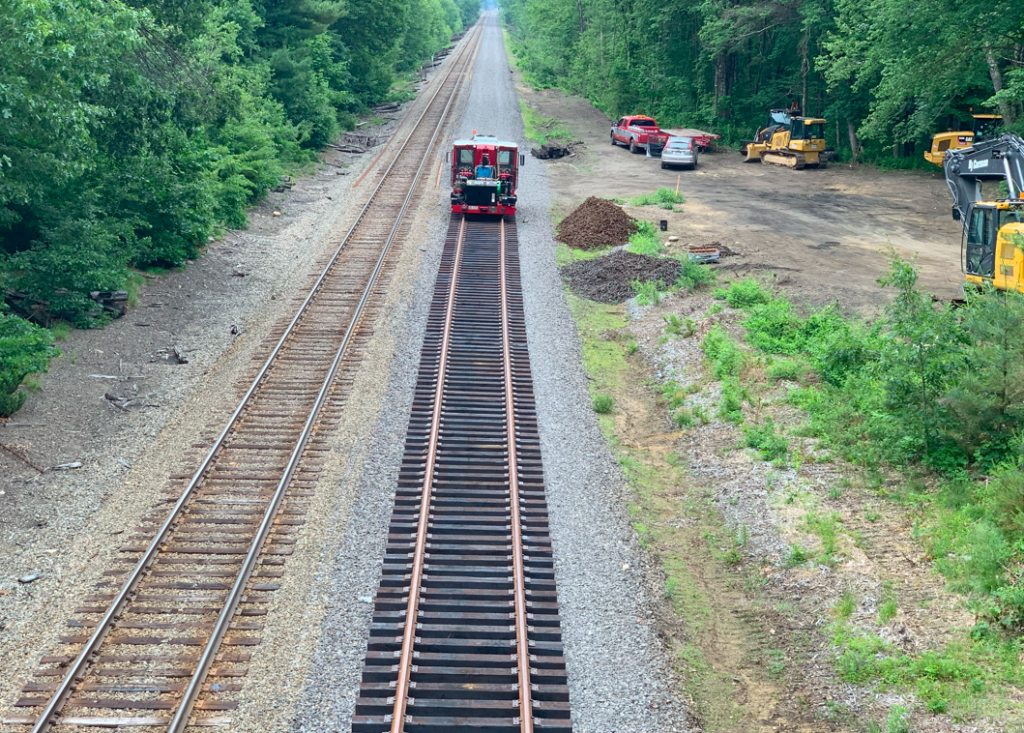
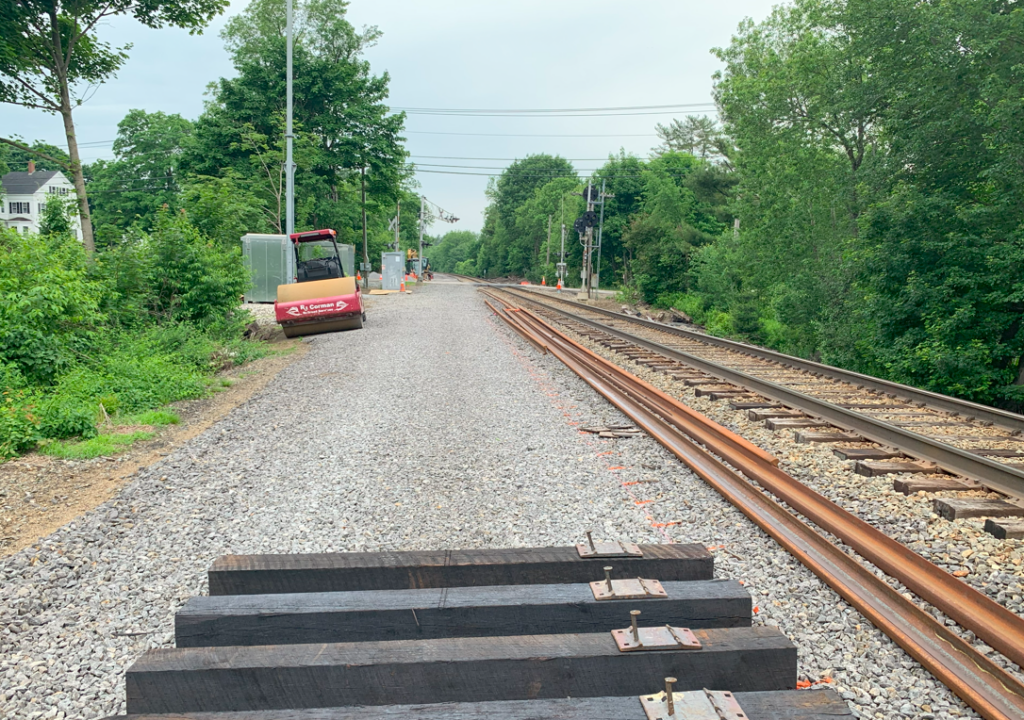
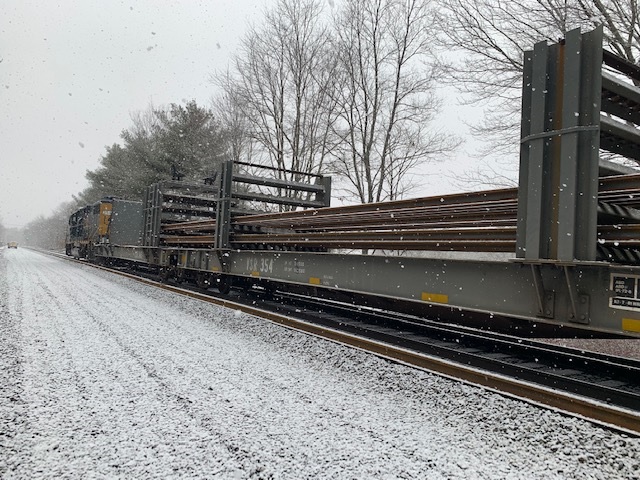
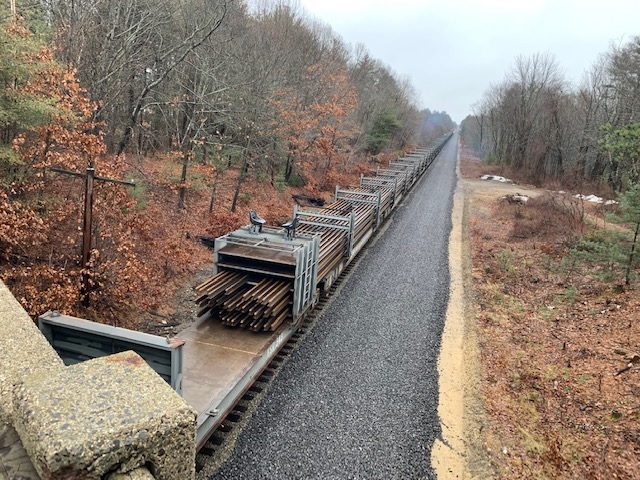
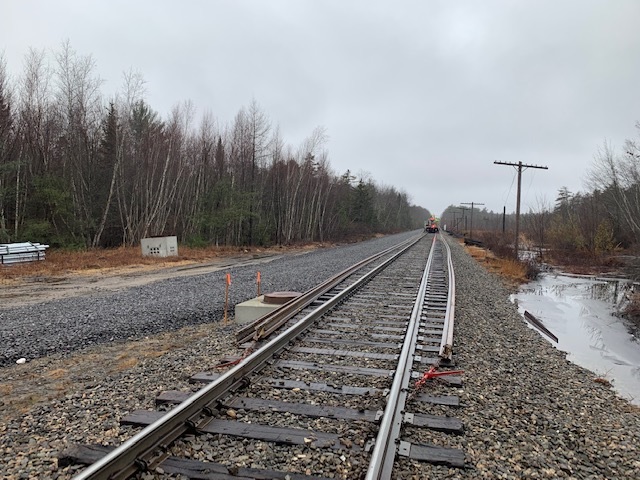
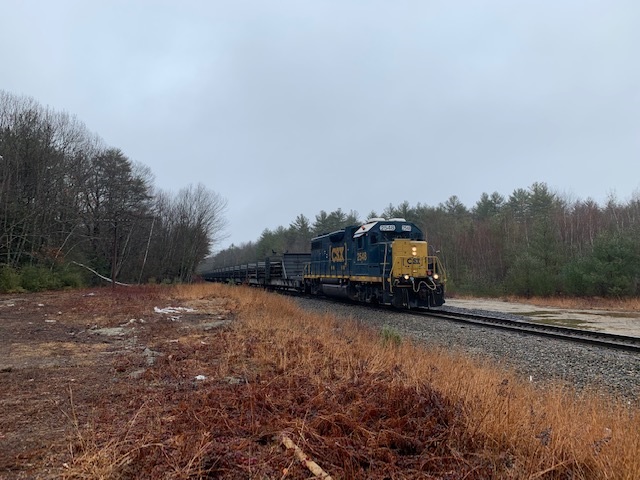
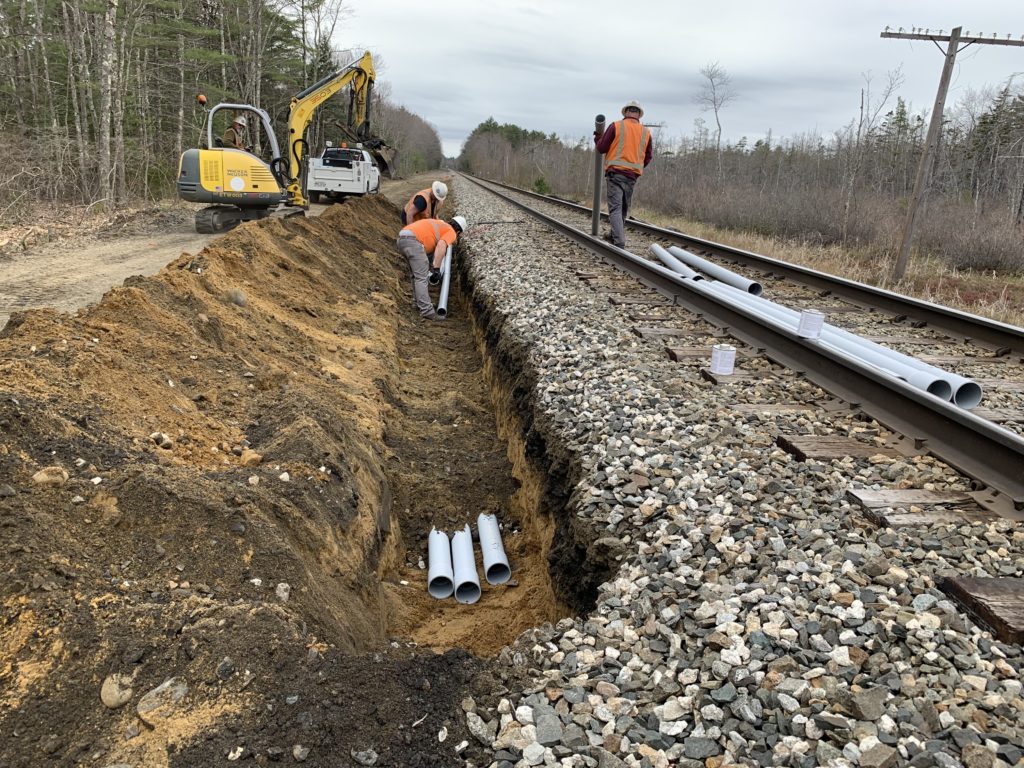
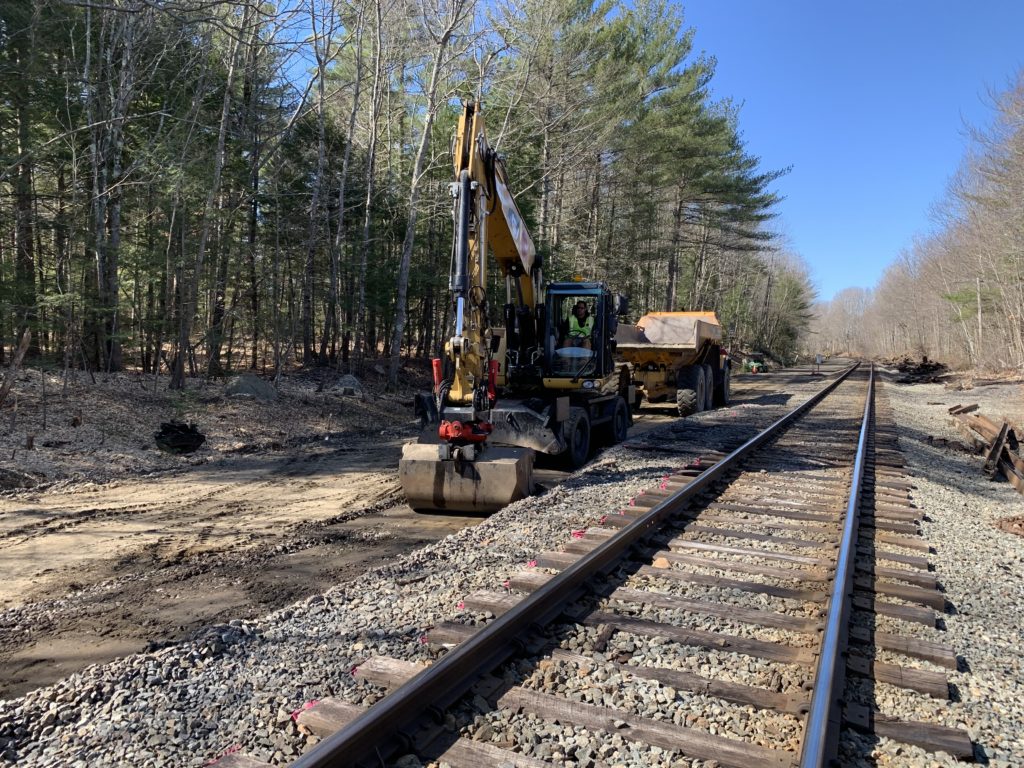
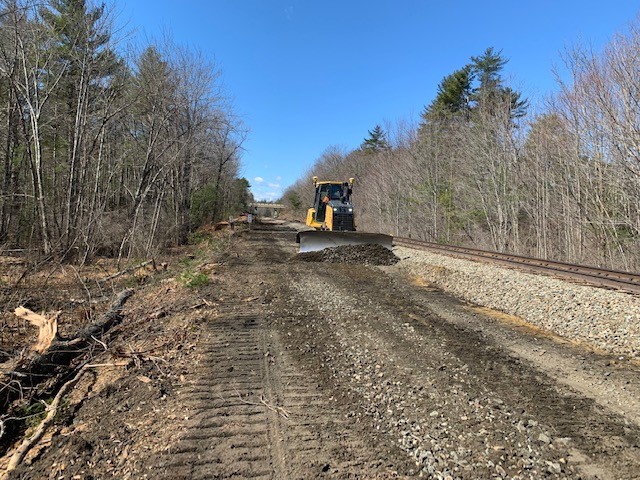
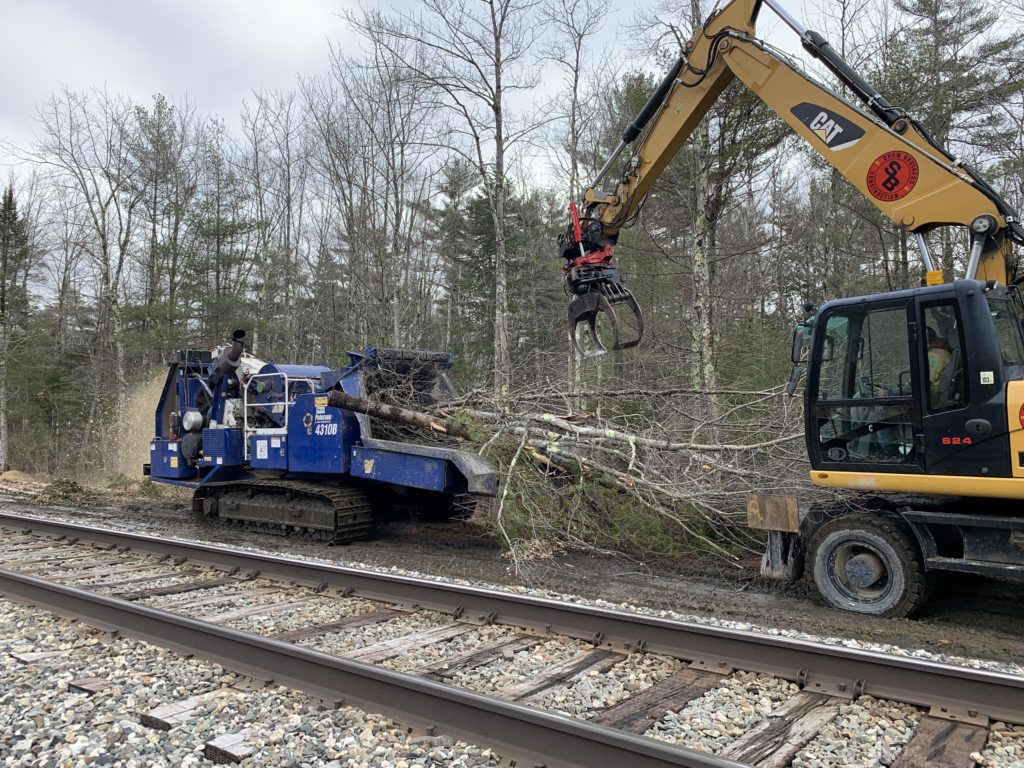
DOUBLE TRACK/ SIDING EXTENSION: CSX Transportation contractor RJ Corman has completed the first Project element, the 6-mile extension of the 2-mile passing track in Wells, in December 2024. The additional track capacity will improve train reliability and increase schedule flexibility for both passenger and freight trains.
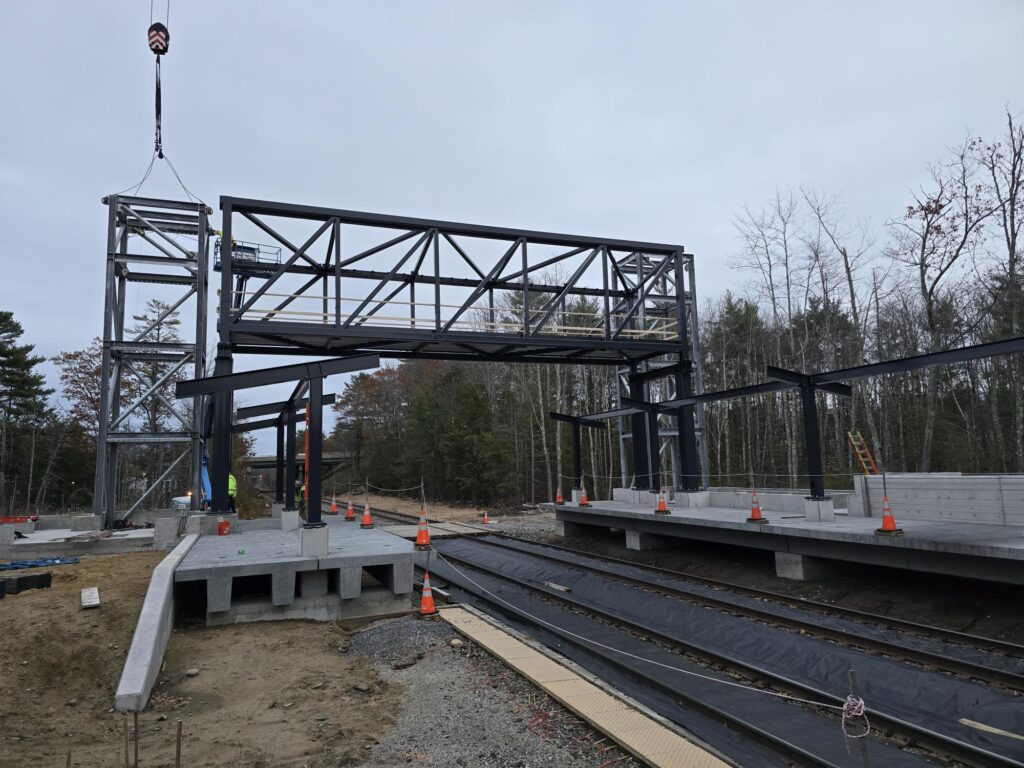
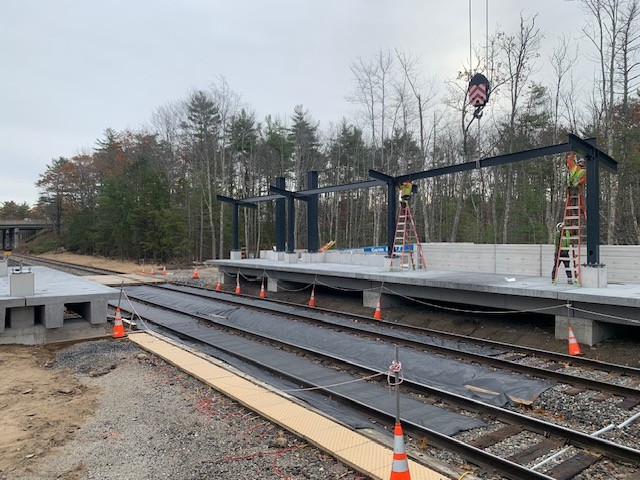
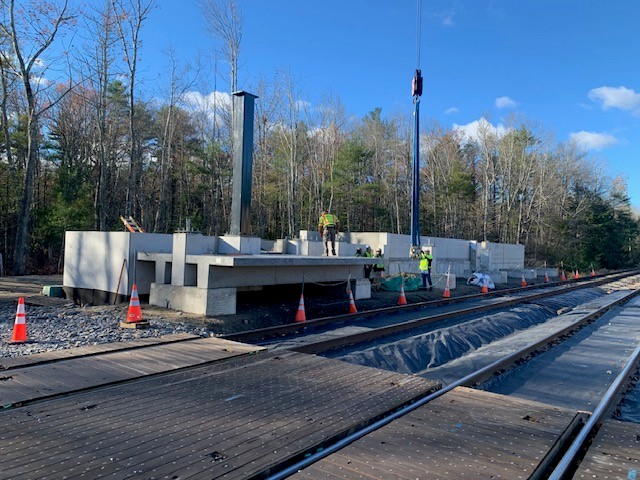
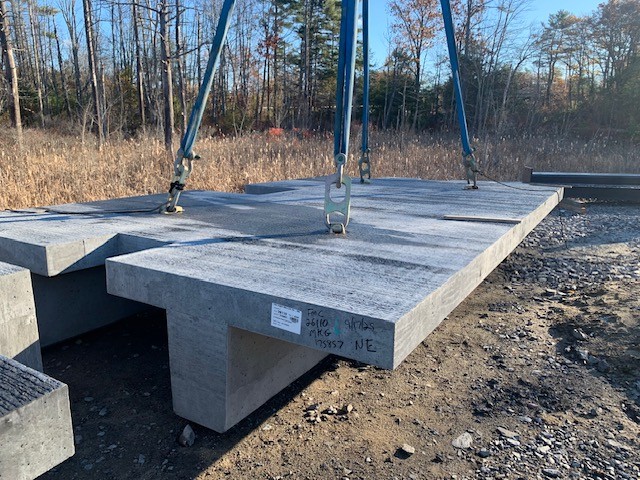
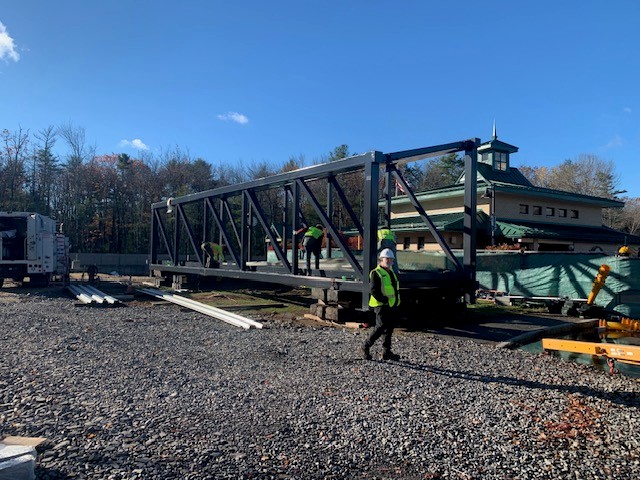
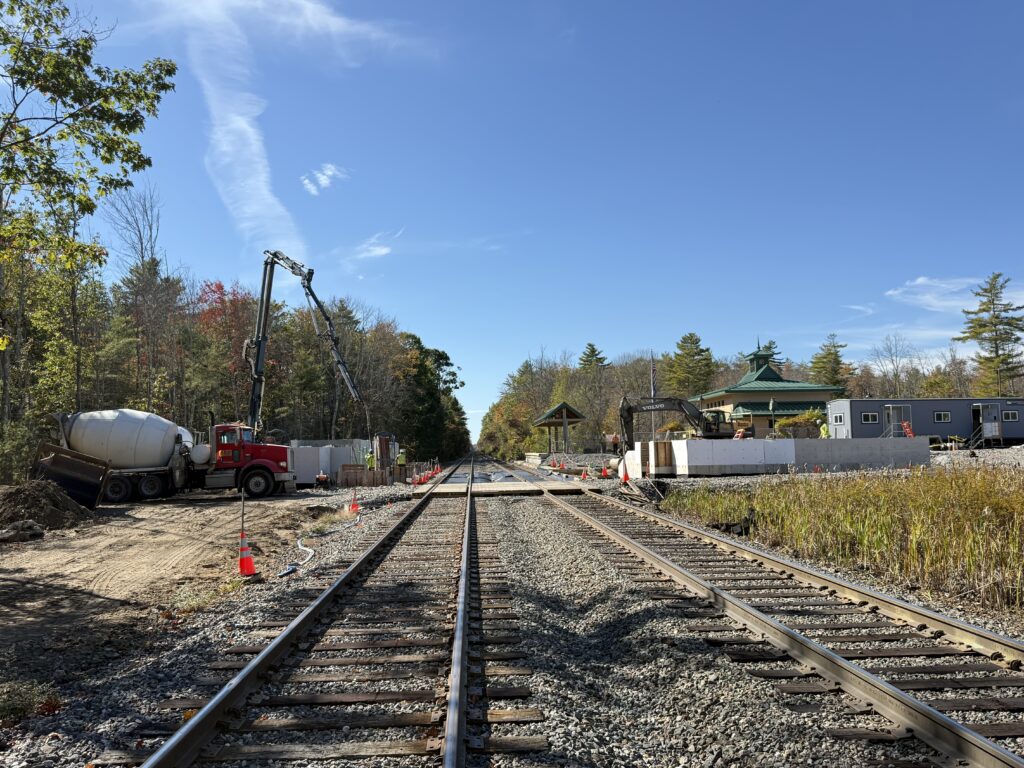
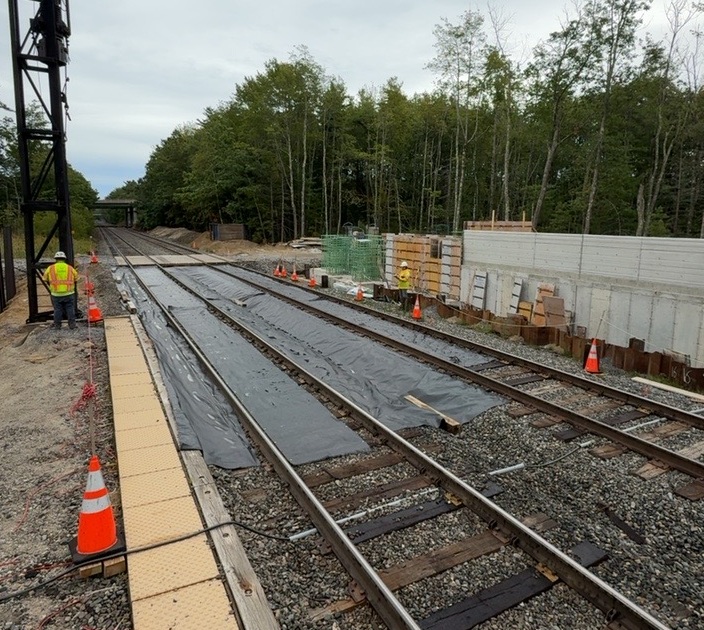
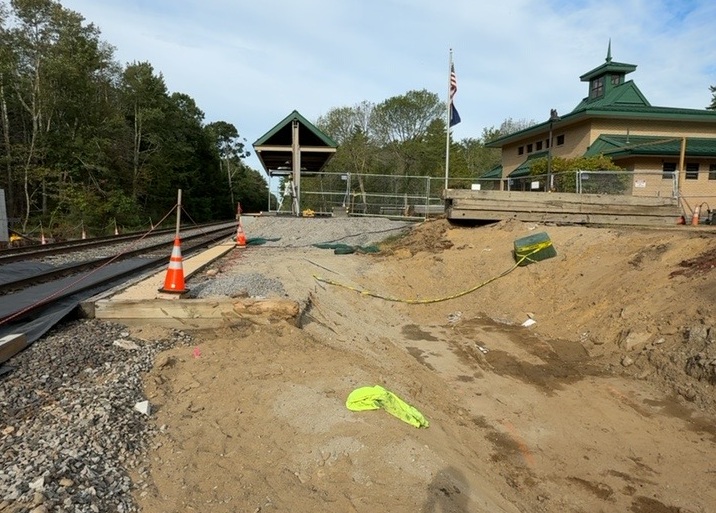
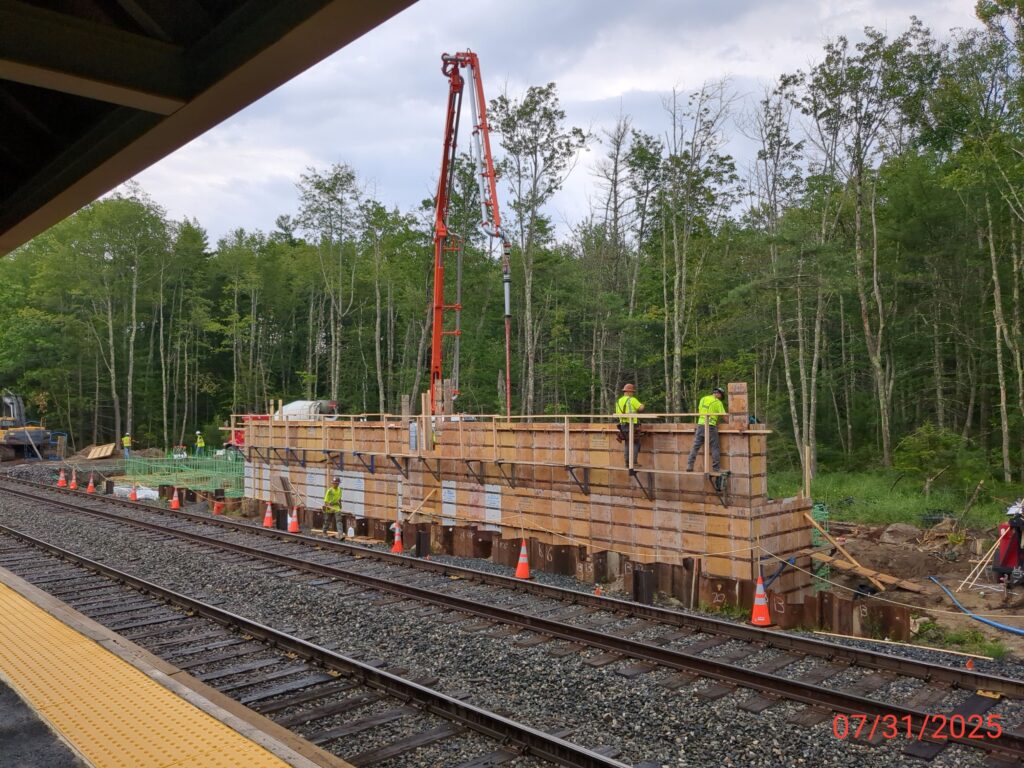
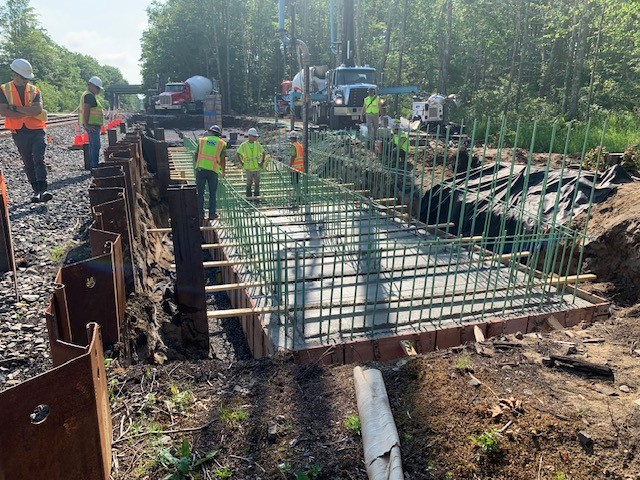
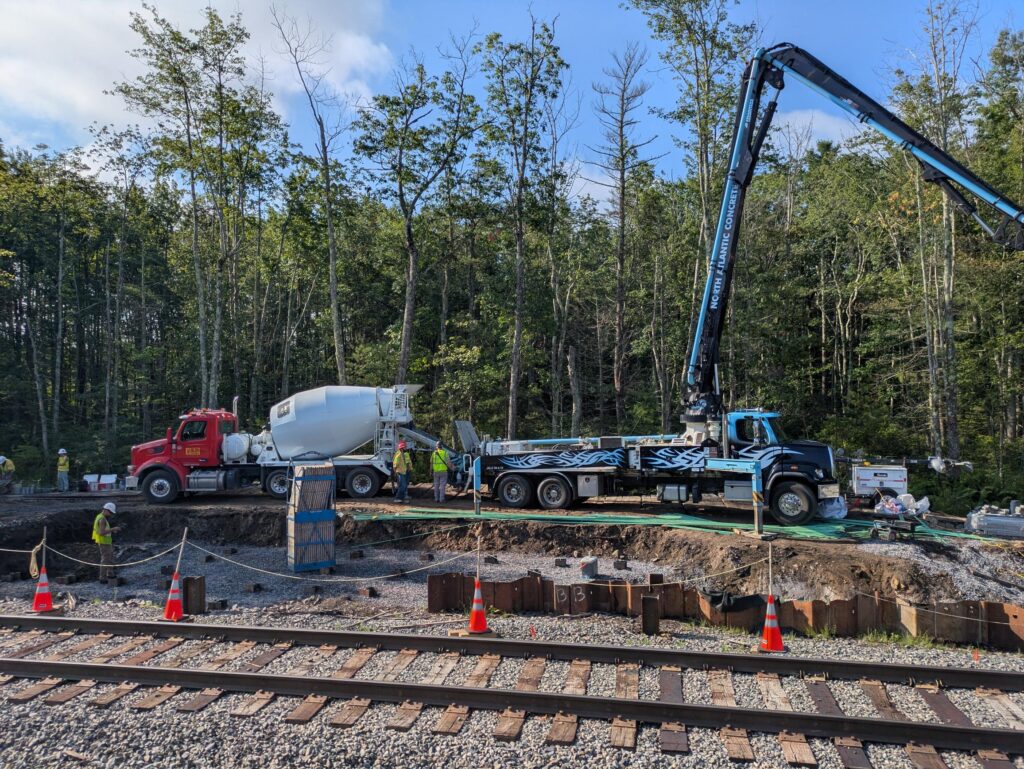
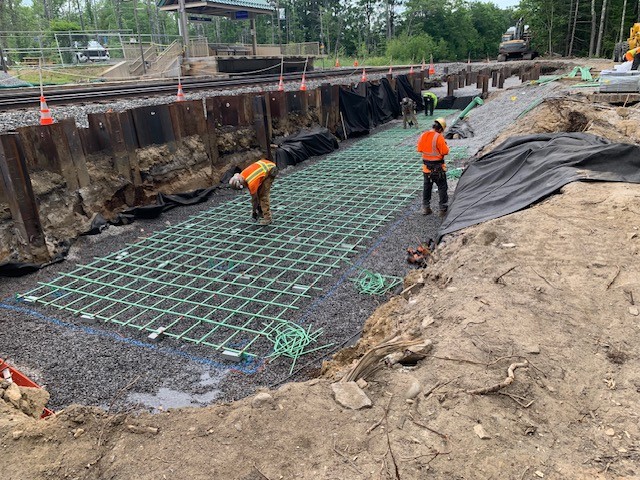
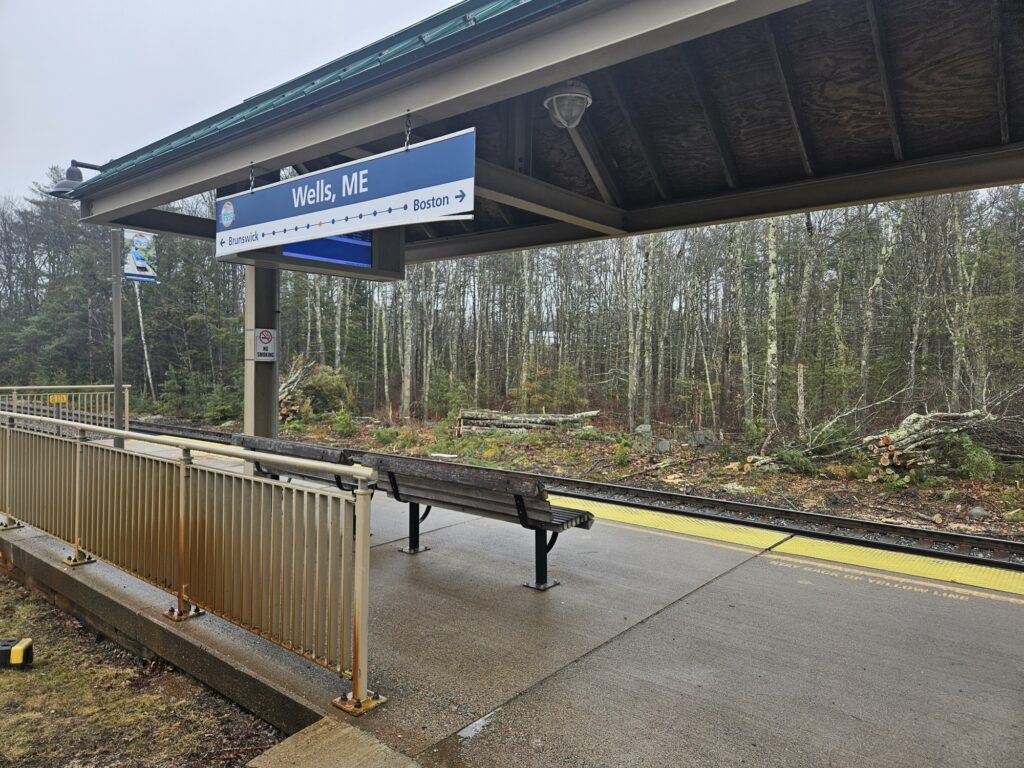
PLATFORM CONSTRUCTION: The second Project element, construction of a new platform at Wells Transportation Center, began March 3, 2025. One boarding platform currently exists adjacent to the Wells station building. That platform will be rebuilt, and a second platform will be constructed across the tracks. The platforms will be connected via an overhead pedestrian bridge. The second platform will allow Downeaster trains operating in opposing directions to board and alight Wells passengers at the same time. Great Falls Construction, based in Gorham, Maine, has been awarded the construction contract.
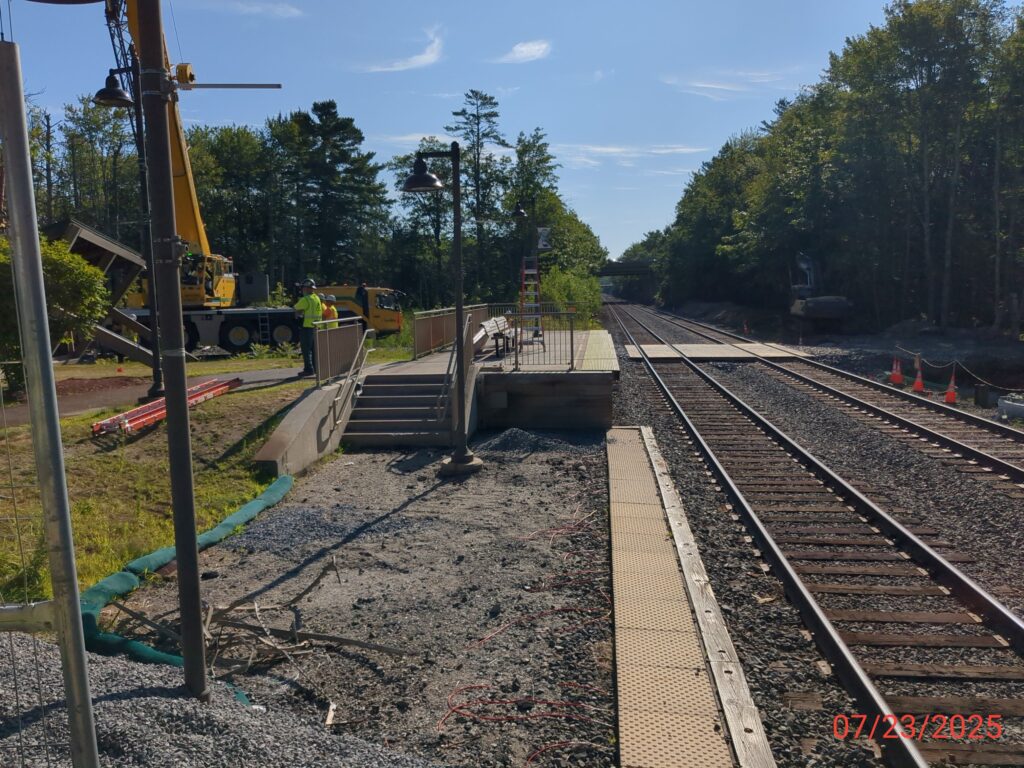
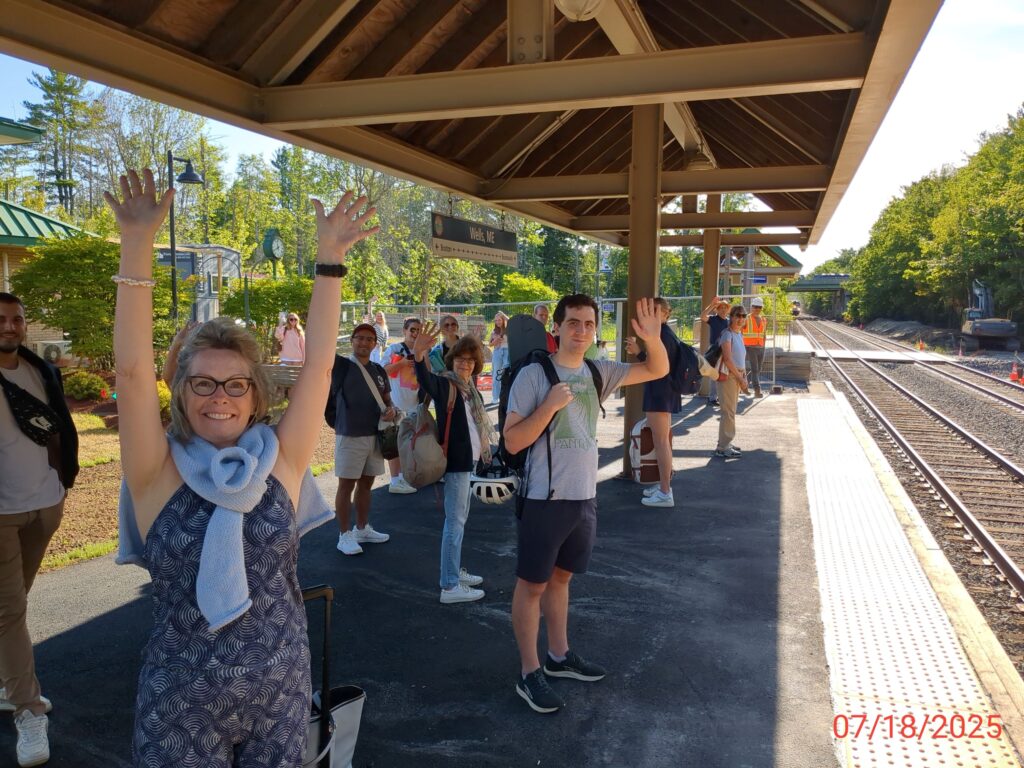
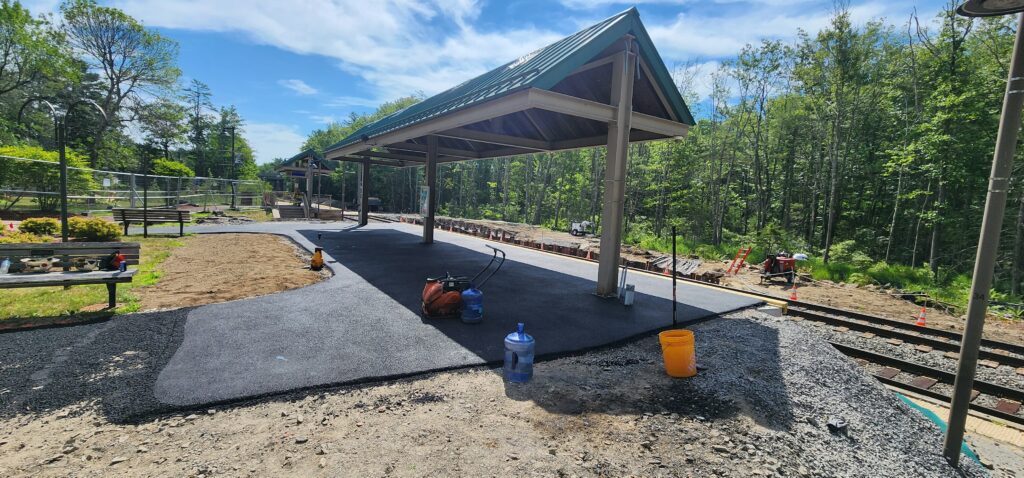
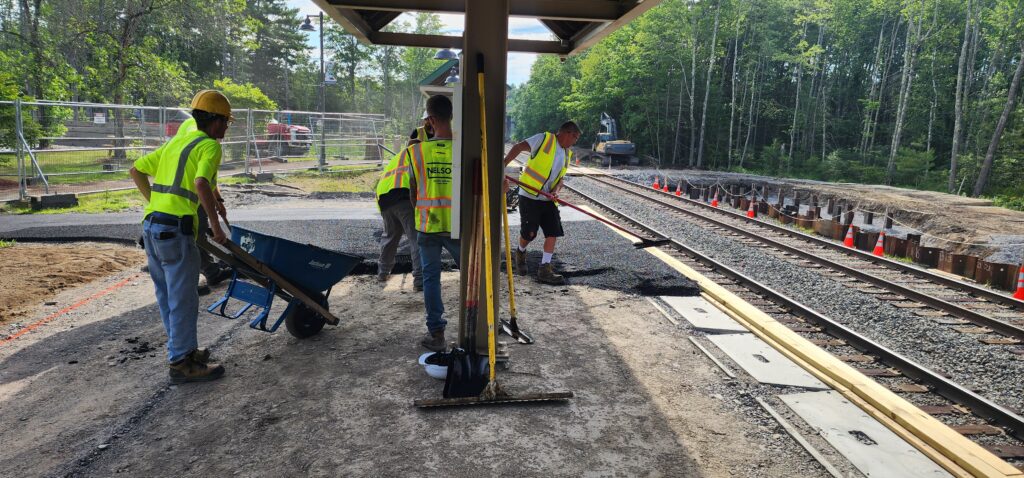
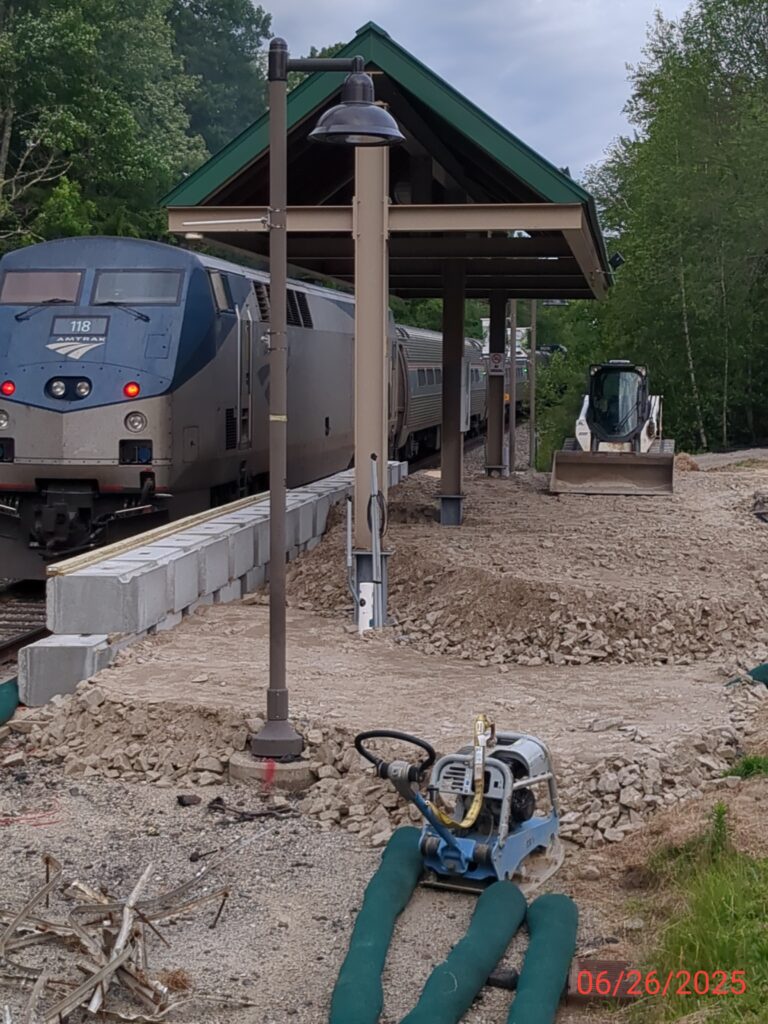
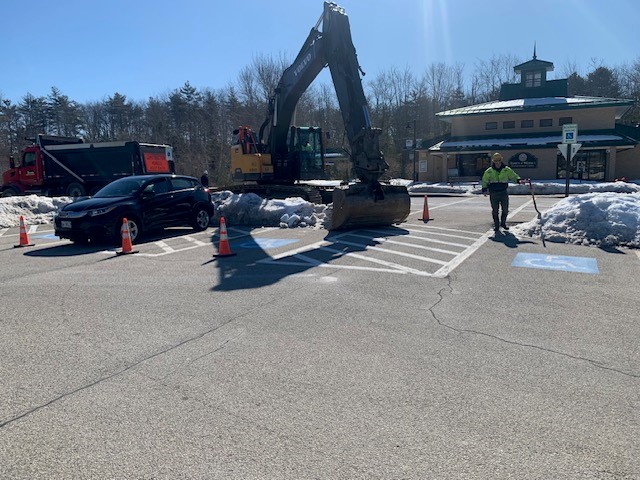
Downeaster trains will remain in operation throughout the lifetime of the Project, but passengers will notice differences at the Wells Station. There will be temporary modifications to vehicular circulation around the station to accommodate construction staging areas and access roads. A temporary Downeaster boarding platform will be built adjacent to the station building to separate passengers from construction activities.
The new expanded facility is expected to be completed late in the fall of 2026. The Project improvements will allow for additional Downeaster train service between Brunswick and Wells aimed to provide commuters with car-free access to and within the greater Portland Region during rush hour.
Project Milestones
Date
Goal
November 2025
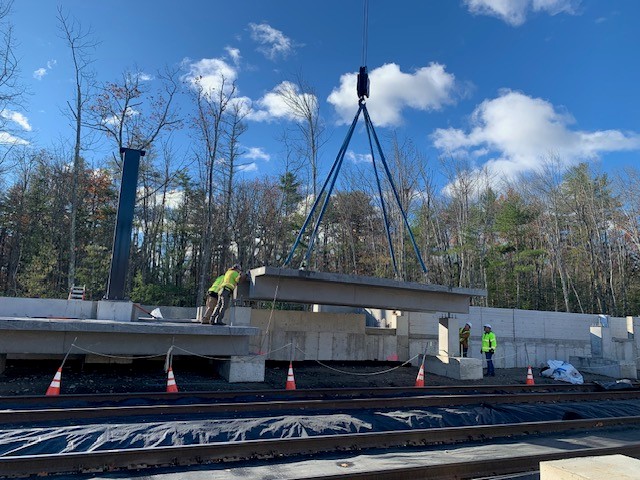
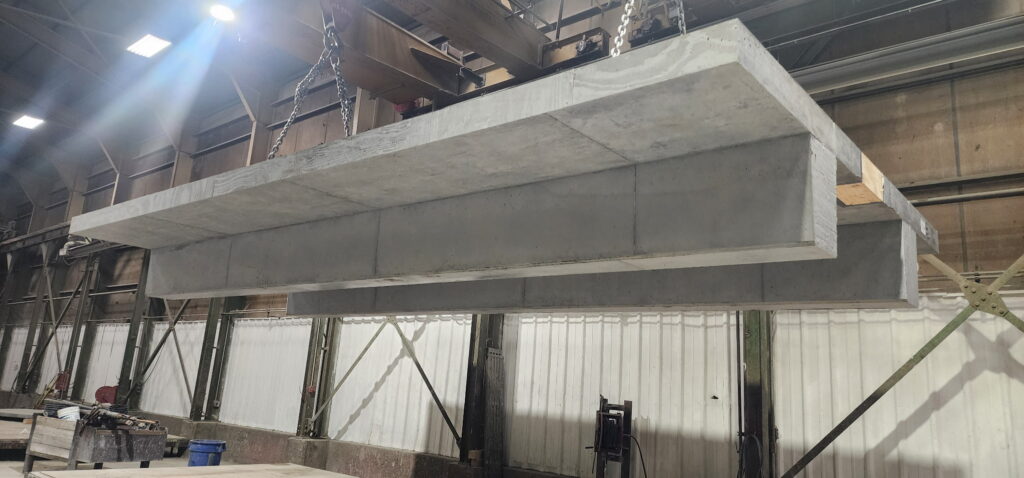
Precast platform, elevator towers, and pedestrian bridge installation complete
September 2025
Concrete walls and foundation have been placed
July 2025
Construction of the temporary high platform complete
June 2025
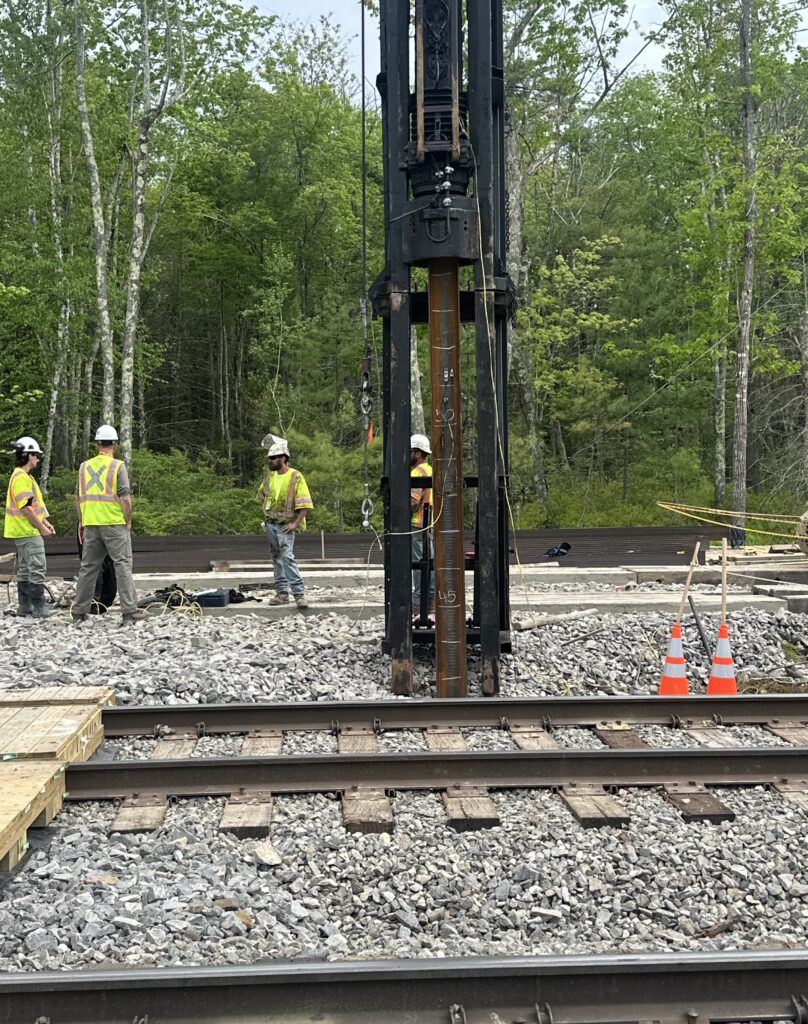
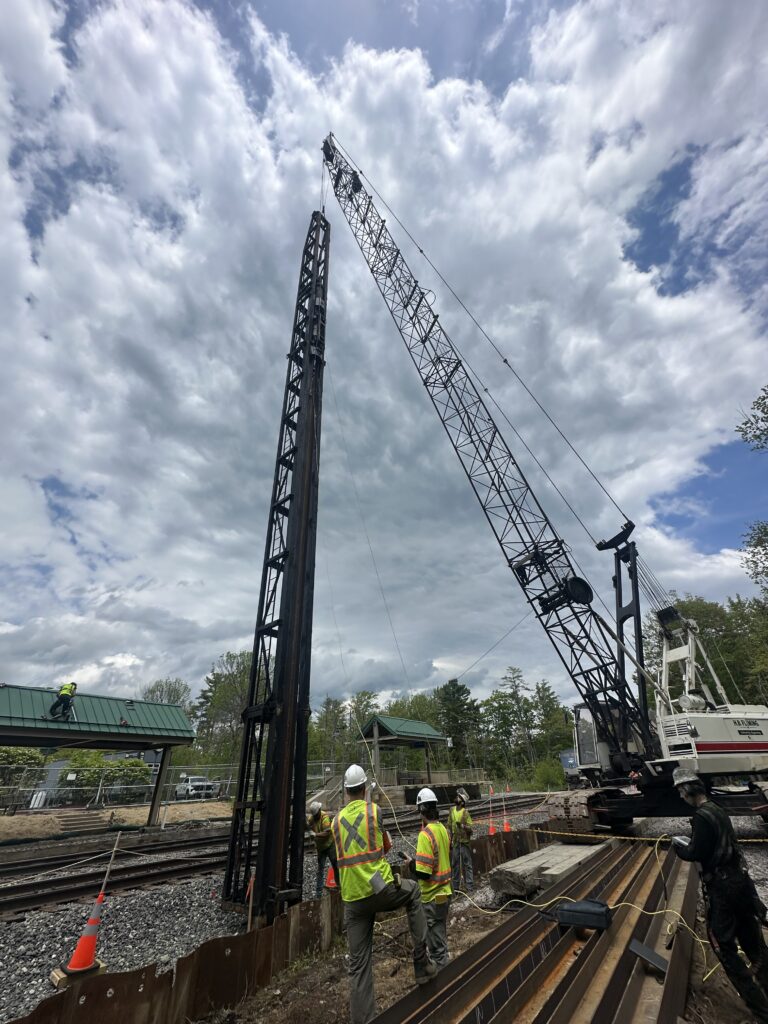
Pile driving for new platform on south side of tracks complete
March 2025
Construction of the new platform and pedestrian bridge begins
February 2025
Contract for construction of the new platform and pedestrian bridge awarded to Great Falls Construction of Gorham, Maine
December 2024
CSX contractor, RJ Corman completes the 6-mile extension of the siding track
Project Budget
The total project budget is $31,095,403.
Seventy-three percent of the total is being paid for through the Consolidated Rail Infrastructure and Safety Improvement Grant awarded to NNEPRA by the Federal Railroad Administration in 2019 matched by a 20 percent contribution from the Maine Department of Transportation and six and a half percent contribution from CSX .
Project Photos
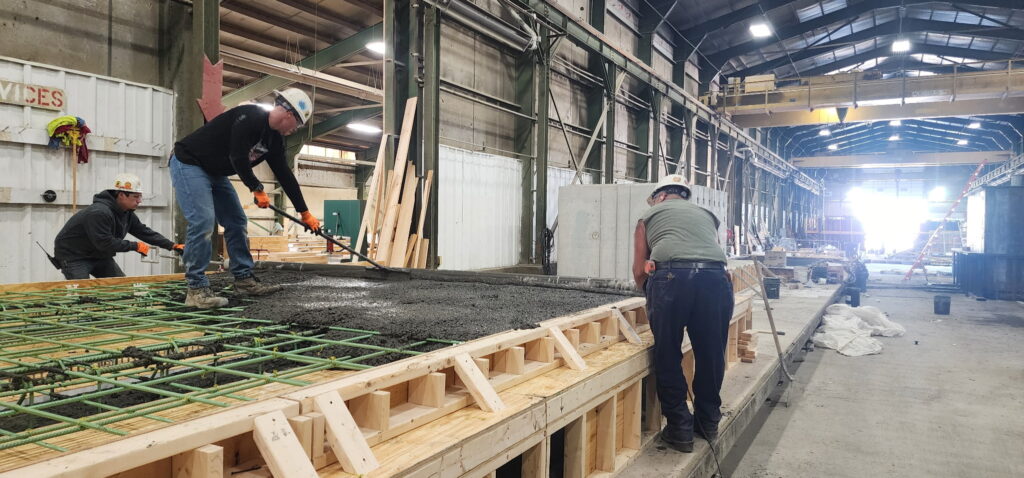
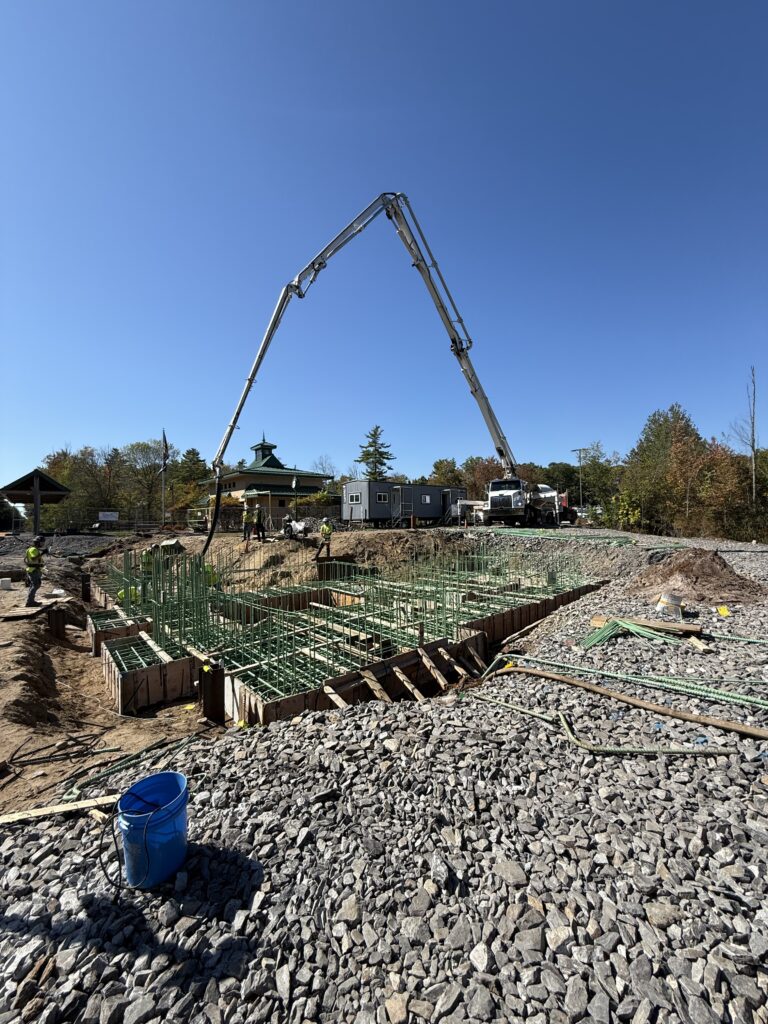
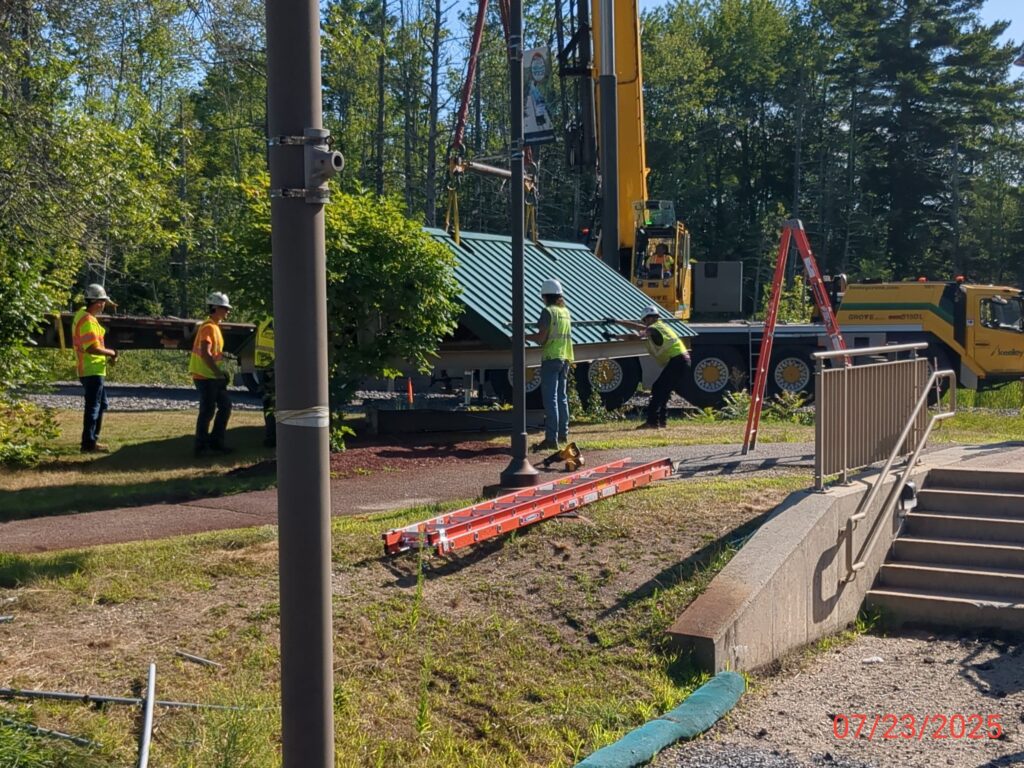
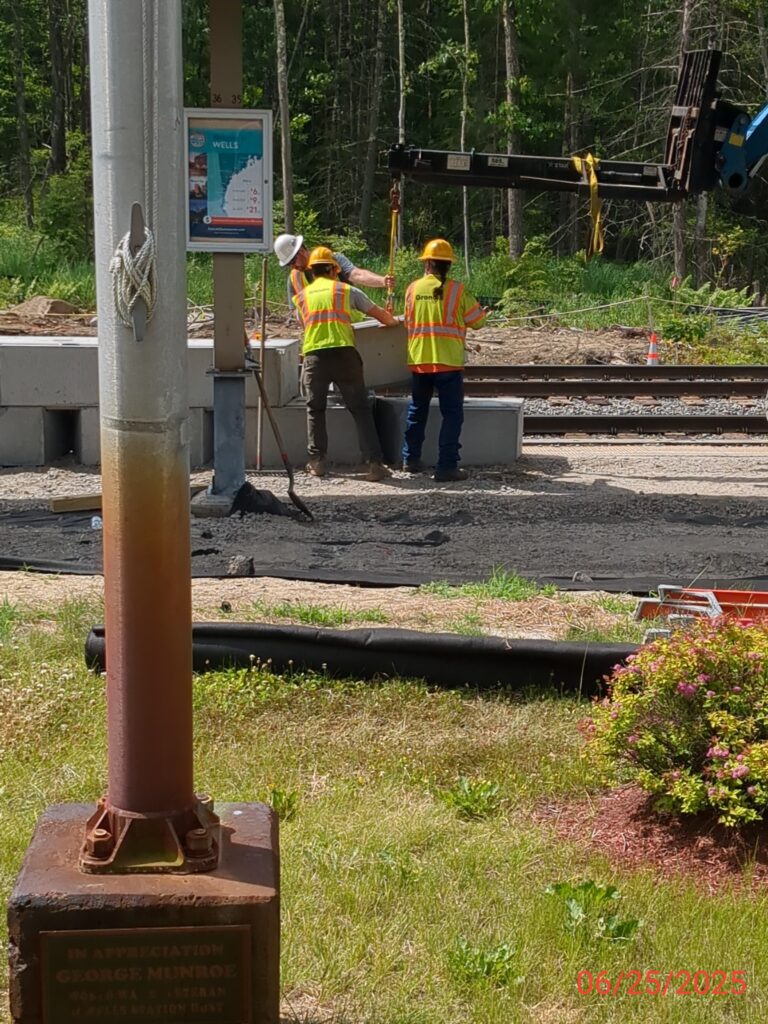
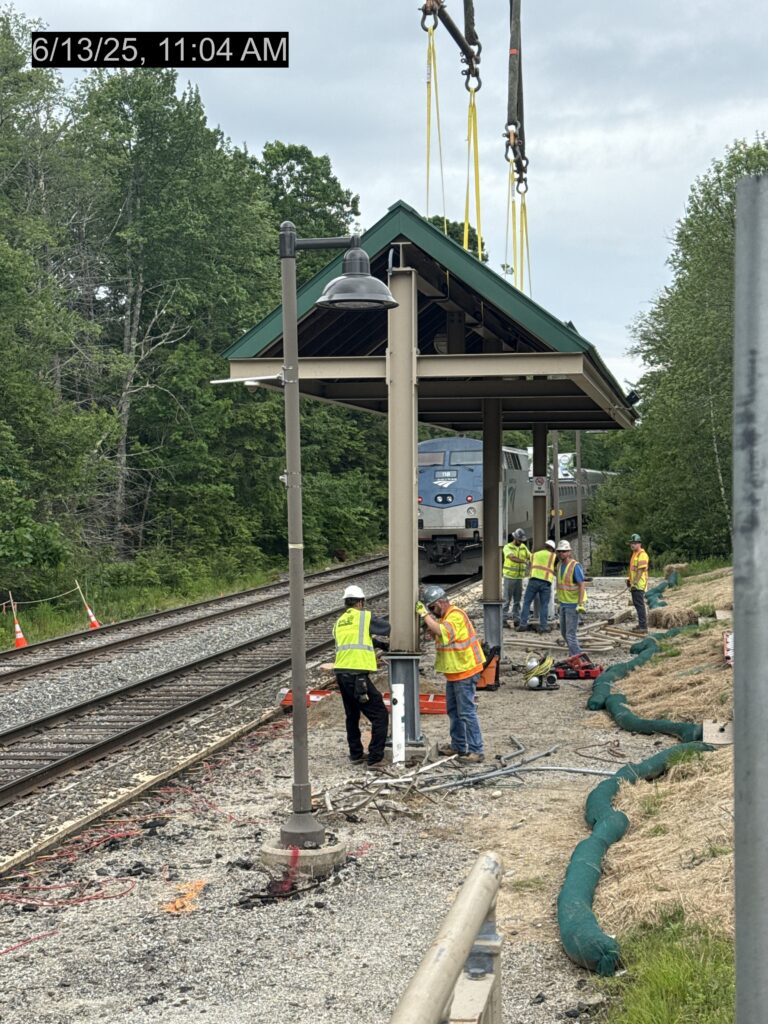
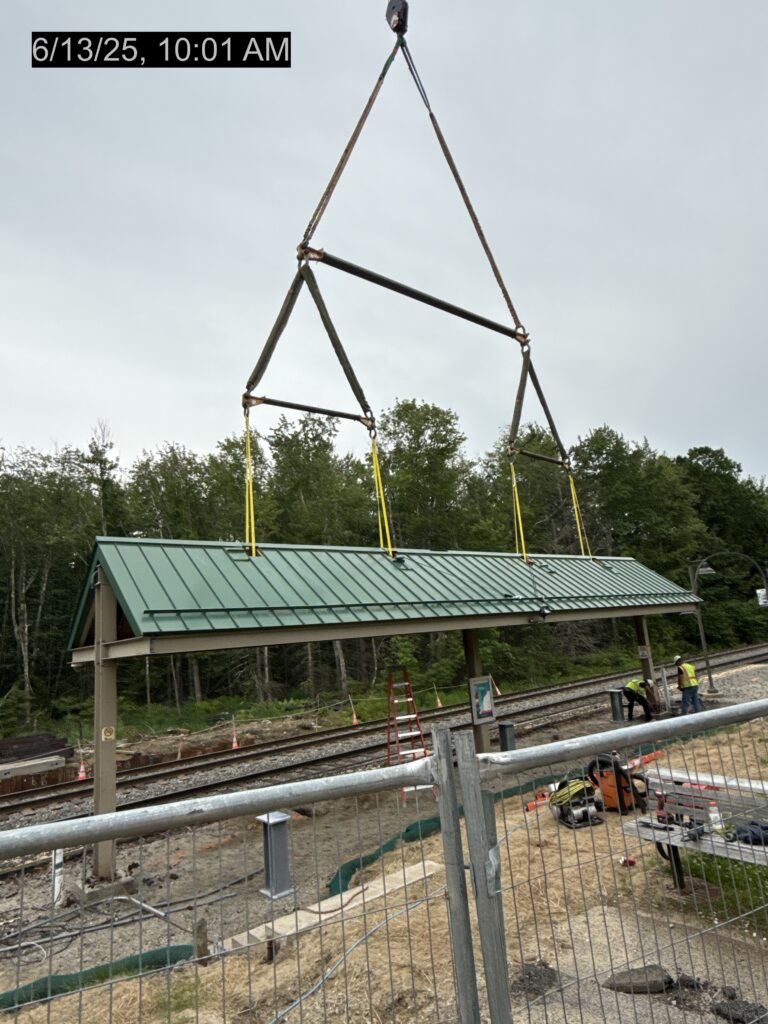
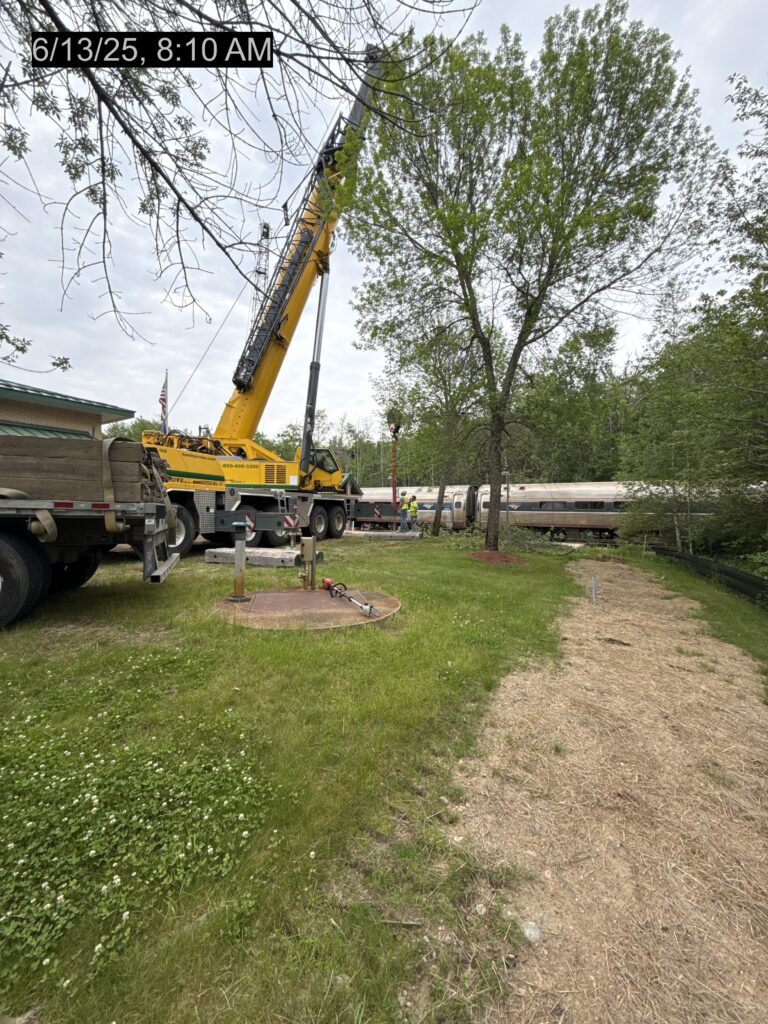
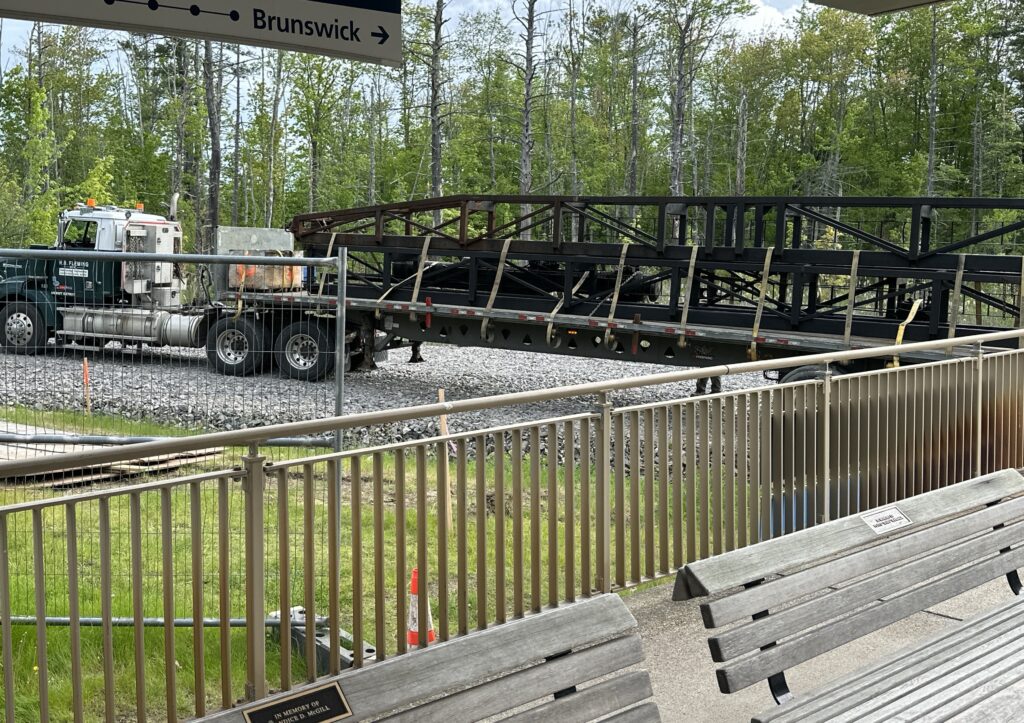
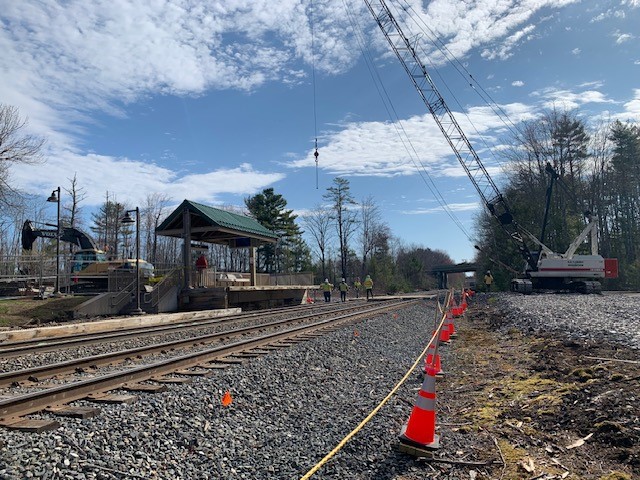
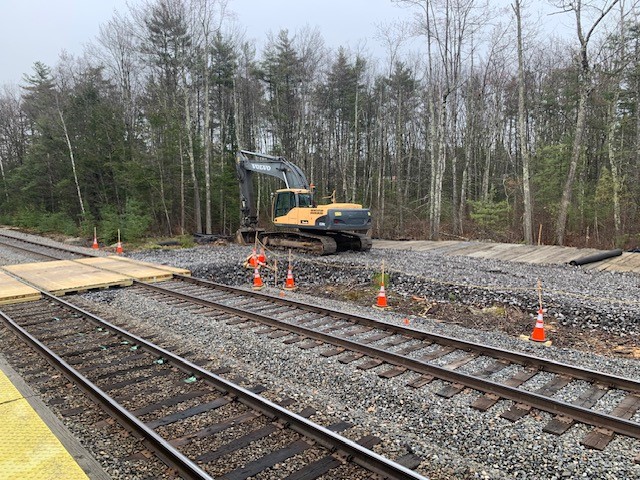
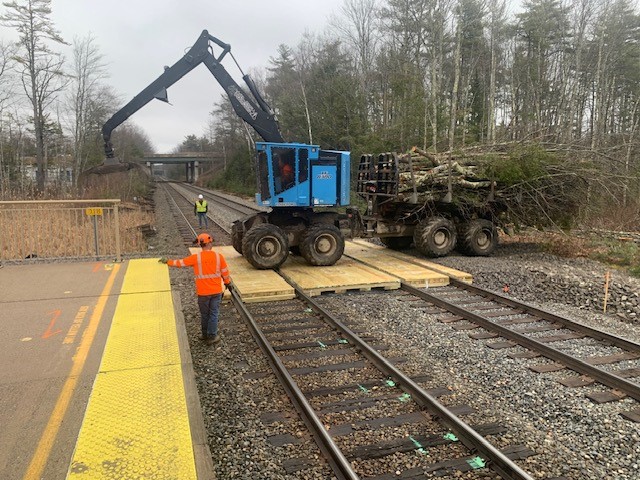
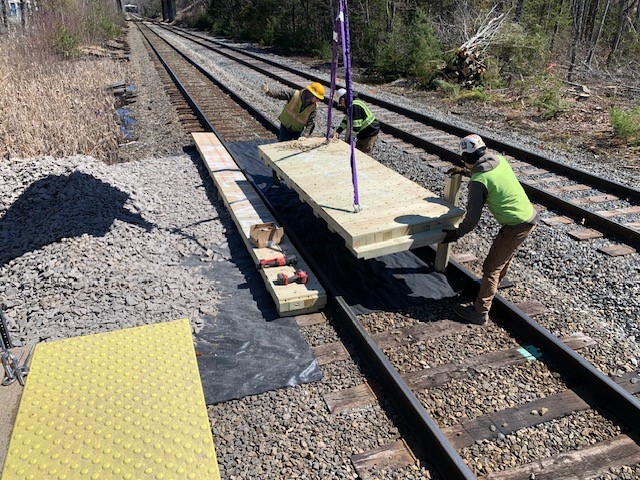
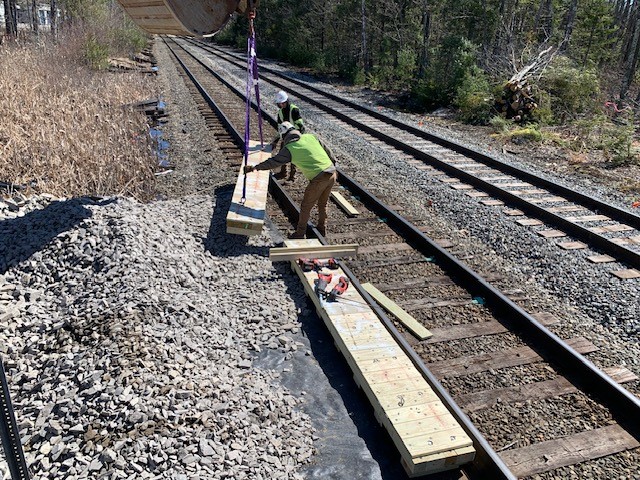
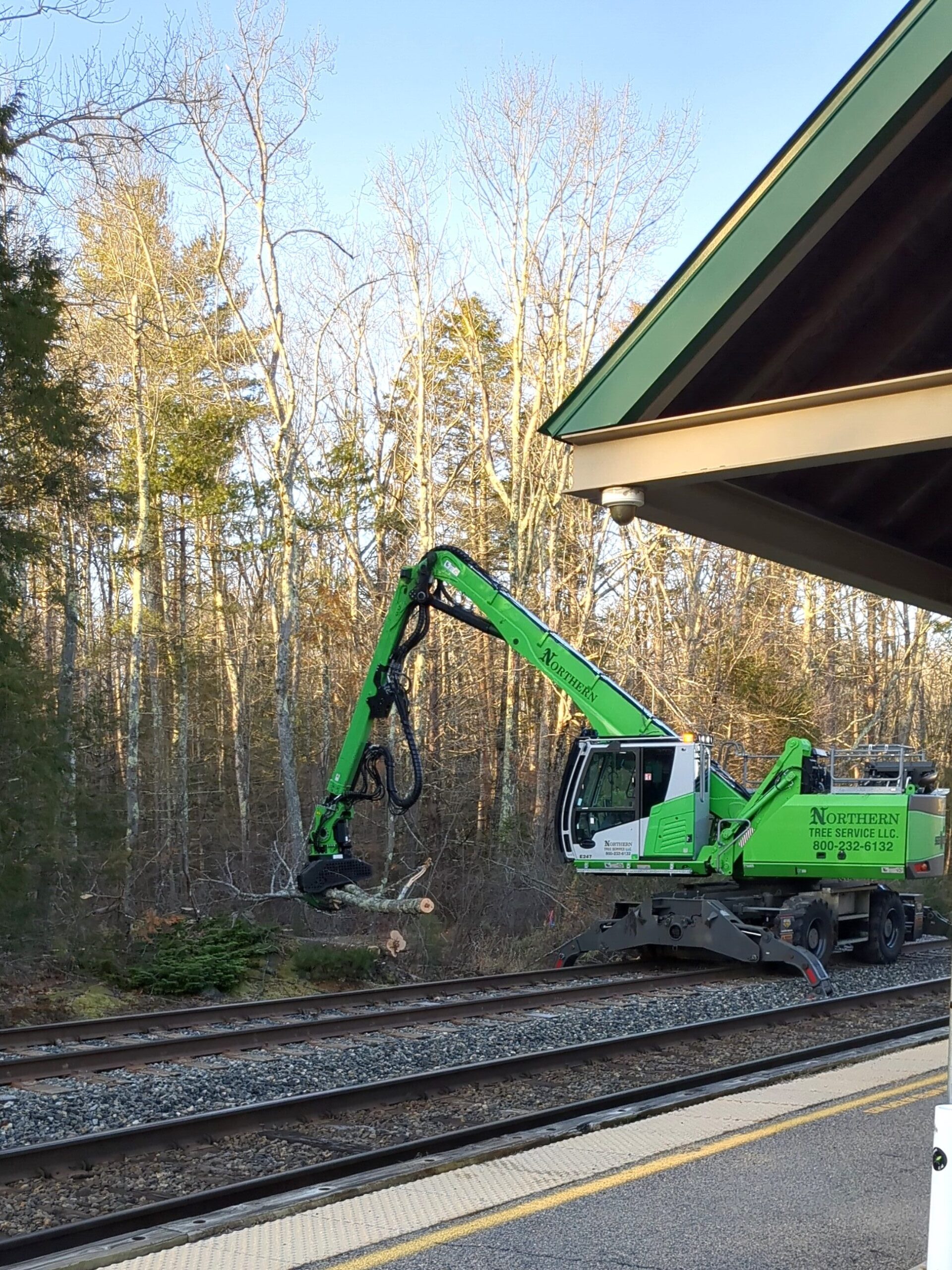
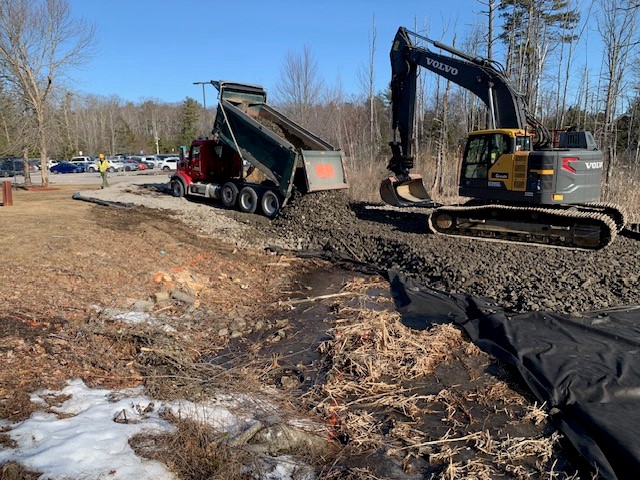
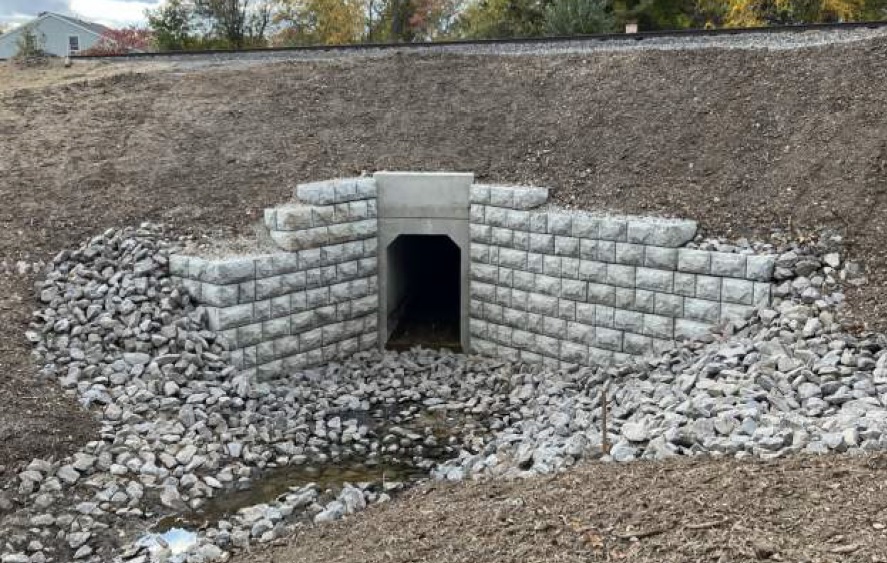
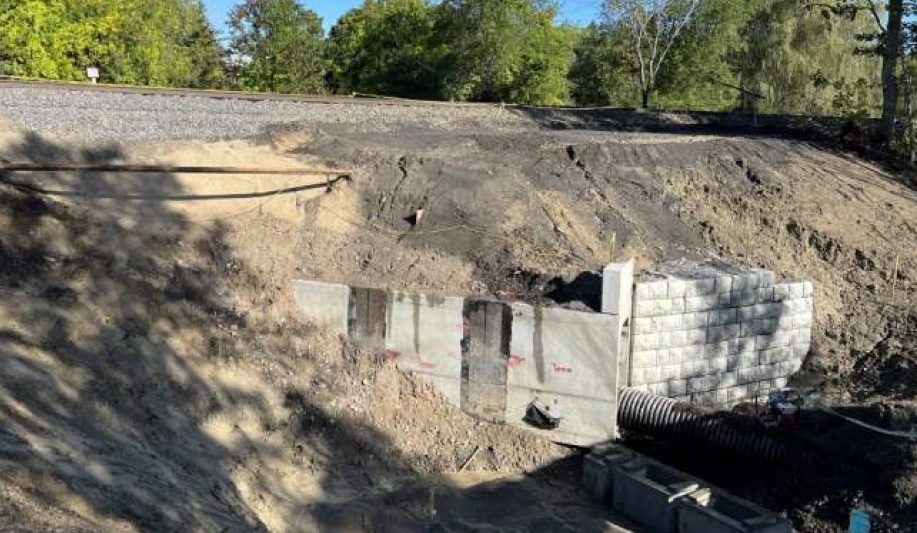
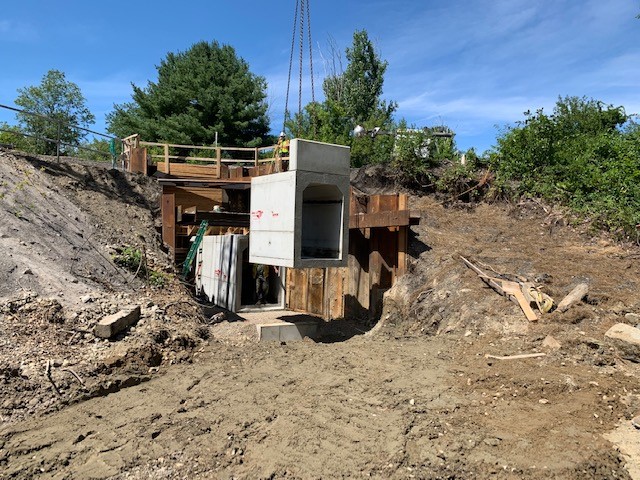
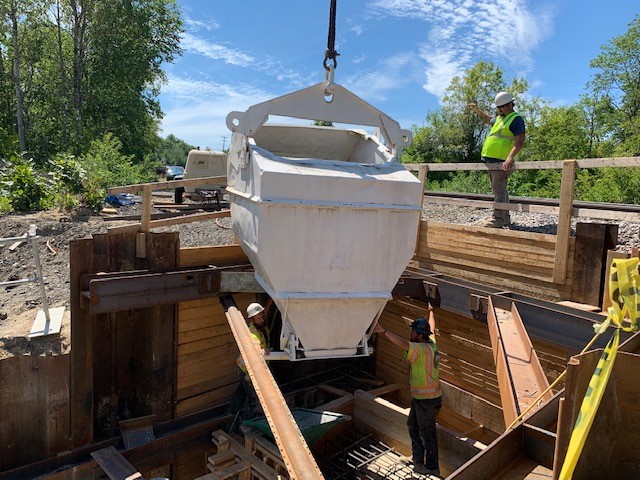
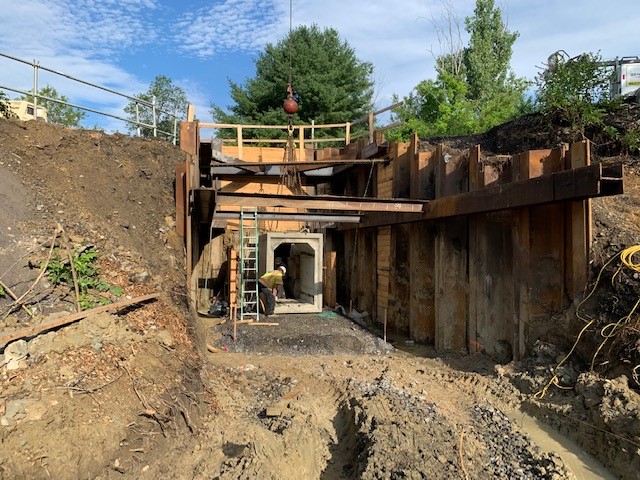
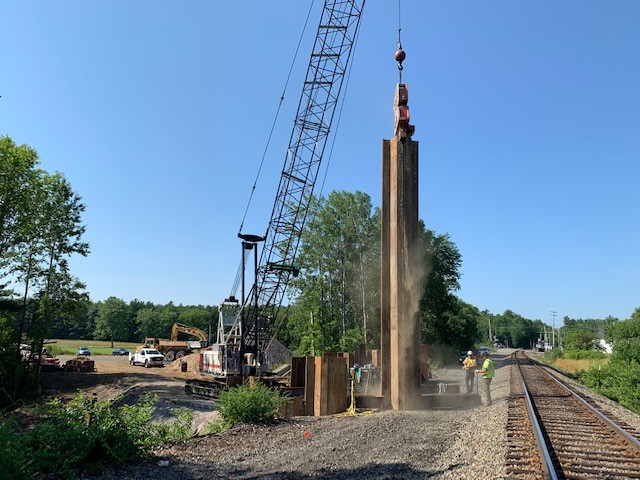
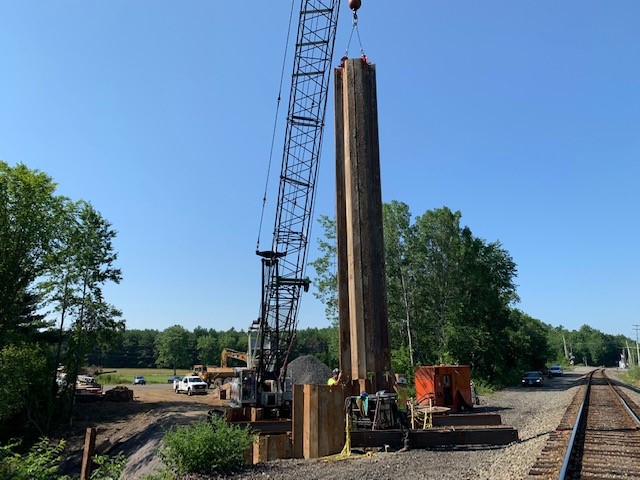
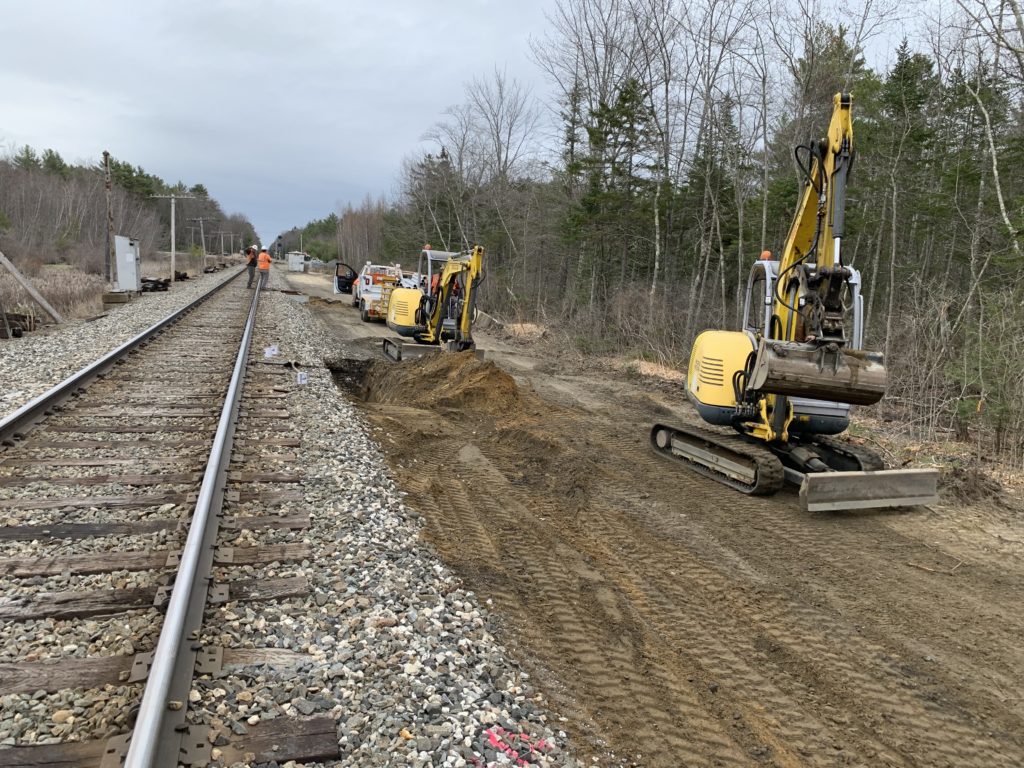
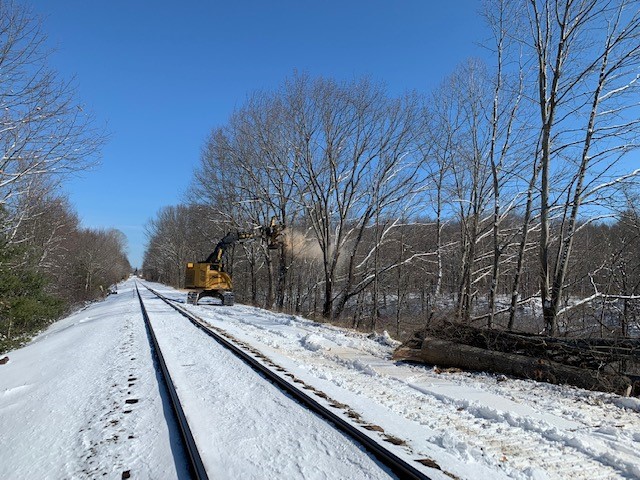
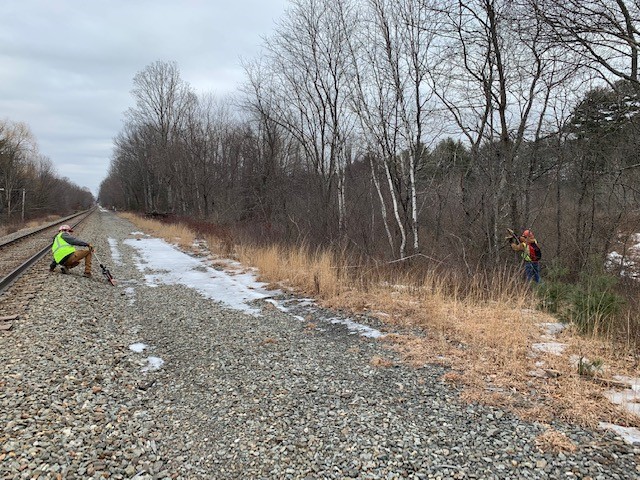
November 2025- Crews completed the installation of the pedestrian bridge.November 2025- The elevator tower being set on the platform.November 2025- Steel components for the Wells platform assembled on-site.November 2025- Installation of precast platform.November 2025- Installation of the first precast platform section underway.November 2025- The crane lifts the first precast platform section into place on the south side.November 2025- Precast section of the platform prepped for installation.October 2025- The pedestrian bridge being assembled on-site by American Aerial Services.October 2025- Concrete work on North Side complete. September 2025- A completed prefabricated platform deck panel is being moved within the Fort Miller concrete plant in upstate New York.September 2025- A concrete platform deck panel is being prefabricated at the Fort Miller plant in upstate New York, with concrete poured over reinforcing steel and into wooden formwork before finishing and curing.September 2025- concrete is being pumped into foundation footing forms for the future north side platform and stair/elevator tower.August 2025- Construction progresses with foundation walls taking shape on the south side platform, while pile driving continues on the north side for foundation support.August 2025- Demolition completed on the existing platform area, clearing the site for upcoming construction.July 2025- Concrete placements underway with forms and rebar in place.July 2025- Deconstruction of the existing high platform begins with the removal of the overhead canopy.July 2025- Deconstruction of the existing high platform begins with the removal of the overhead canopy.July 2025- Deconstruction of the existing high platform begins with the removal of the overhead canopy.July 2025- The temporary platform opens for passenger boarding, providing convenient access during ongoing station upgrades.July 2025- Concrete for the foundation of the second platform.July 2025- North Atlantic Concrete crews place concrete for a major section of the foundation for the second platform.July 2025- Crews work on the foundation footings of the south side platform. July 2025- Paving complete for the newly constructed temporary boarding platform.July 2025- Paving the newly constructed temporary boarding platform.June 2025- The temporary platform begins to take shape.June 2025- Contractors make progress on the temporary platform structure.June 2025- Crews secure the lifted platform canopy.June 2025- A crane carefully lifts the platform canopy.June 2025- Crane positioned to lift the canopy on the passenger platform May 2025- HB Fleming drives piles for the second passenger platform.May 2025- HB Fleming drives piles for the second passenger platform.May 2025- A truck arrives on the job site with crane for the construction of the second passenger platform.April 2025- The H.B. Fleming crane relocated to the south side of the tracks.April 2025- Stump removal is complete under the new platform area. April 2025- Temporary grade crossing completed in Wells; first load of trees cleared for future second platform.April 2025- Prefabricated timber deck panels installed for the temporary grade crossing.April 2025- Prefabricated timber deck panels installed for the temporary grade crossing.March 2025- Downed trees mark the site where the new second passenger platform will be built.March 2025- Tree clearing was underway.March 2025- Construction of the temporary access road begins.March 2025- Great Falls Construction and R.J. Grondin & Sons mobilize at Wells StationDecember 2024- doubletrack extension is completeDecember 2024- The newly extended track in use by the Amtrak DowneasterSeptember 2024- RJ Corman removes #15 frog panelSeptember 2024- RJ Corman removes #15 frog panelSeptember 2024- RJ Corman removes the turnout panel (switch) at CPF 228.August 2024- CSX welding contractor.August 2024- RJ Corman installs the second turnout.July 2024- RJ Corman spreads stone ballast throughout the new panel.July 2024- RJ Corman installs the pre-built #20 turnout panel.July 2024- To date, RJ Corman has constructed 6,000 track feet (TF) of skeletonized trackJuly 2024- RJ Corman has approximately 3,000 TF single plated of ties laid out.May 2024- RJ Corman’s crew lays out ties.May 2024- Track construction is underway on Wells Siding.May 2024- Track construction is underway on Wells Siding.January 2023- The CSX Rail Train carrying 115lb continuously welded rail.January 2023- Crews offloading the rail in Wells. January 2023- The CSX Rail Train arrives at CPF 228 carrying 115lb continuously welded rail that will extend the existing siding six miles between Wells, ME and North Berwick, ME.September 2022- Final culvert. September 2022- Construction of culvert wingwall. August 2022- Precast concrete culvert being set and connected. August 2022- Precast concrete culvert being set. August 2022- CPM Construction crews continues work on the Wells culvert repair. July 2022- Crews driving sheet piles into the ground using a vibrating hammer. July 2022- HP Fleming driving sheet piles for the culvert rehabilitation east of Varney’s crossing in Berwick, ME. April 2022- Pan Am signal department covering conduit for new interlocking. April 2022- Pan Am signal department installing electrical conduit. April 2022- Shaw Brothers Construction cutting sub grade. March 2022- Shaw Brothers Construction cutting sub grade for the new siding track before placing ballast. March 2022- Shaw Brothers Construction and Beaulieu Logging chipping trees along the railroad right-of-way. March 2022- Tree clearing, Berwick Maine February 2022- Project survey team
NNEPRA was accepted into the Federal Railroad Administration’s Corridor Identification and Development Program (CID) through a competitive discretionary grant application. CID is a comprehensive intercity passenger rail planning and development program that will help guide intercity passenger rail development throughout the country and create a pipeline of capital projects ready for implementation.
The Downeaster Service Development Plan will outline a strategic vision to enhance and expand intercity passenger rail service along the Downeaster Corridor. Building on the success of the existing Amtrak Downeaster between Brunswick, ME and Boston North Station, the plan will evaluate infrastructure improvements to increase reliability, reduce travel time, and boost service frequency.
It includes studying improved multi-modal connections within the Boston transit network—North Station, Back Bay, and South Station—to enable smoother transfers to the Northeast Corridor (NEC) and other national routes.
The plan will also examine the potential ridership on a 56-mile eastward extension to mid-coast Maine.
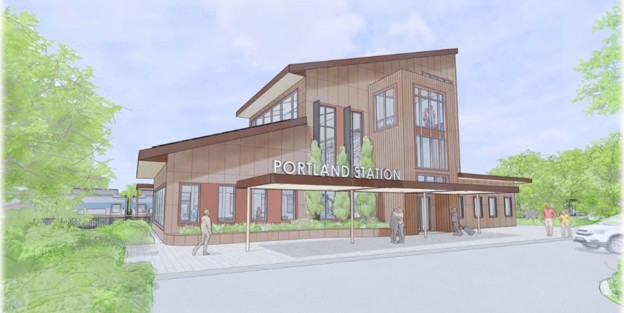
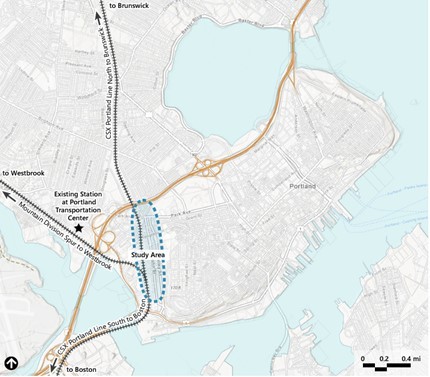
NNEPRA plans to relocate the Downeaster train station in Portland, Maine to a location along the CSX Freight Mainline (parallel to St. John Street). The current station is located approximately 1 mile down a branch line. The mainline station location will reduce travel time for Downeaster riders, improve reliability of freight and passenger trains, and reduce Downeaster operating costs. These positive impacts will increase Downeaster ridership and revenue, take cars off the road and support economic development along the Downeaster Corridor. NNEPRA plans to pursue funding for final design and construction of the $55M project through the Federal Railroad Administration (FRA), in collaboration with MaineDOT.
A new station location is particularly important due to the pending addition of more Downeaster train frequencies which will provide a convenient schedule for workers commuting into and within the greater Portland region from Maine stations. Currently, the first northbound train arrives in Portland at 11:18 am, but the added train will arrive into Portland (from Wells, Saco and Old Orchard Beach) at approximately 8:00am.
The 2023 Maine State Rail Plan (MSRP) passenger rail investment program includes relocating Portland Station, forecasting that the time savings and improved accessibility to employment centers would increase Downeaster ridership by 66,000 riders annually.
The Portland Station relocation project (Project) has received strong public support, reflecting widespread interest in improved passenger rail service, creating access to jobs and regional connectivity.
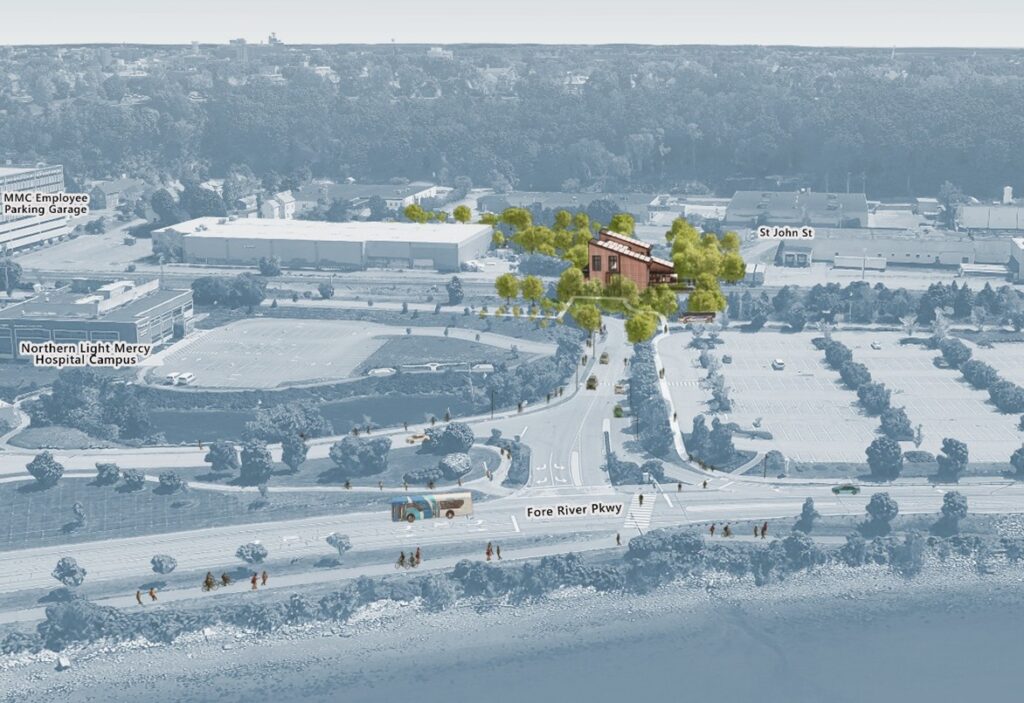
The new station is planned to be located along the CSX mainline, parallel to St. John Street. The Site selected by NNEPRA and MaineDOT, through an extensive alternatives analysis, is located between Northern Light Mercy Hospital and St. John Street.
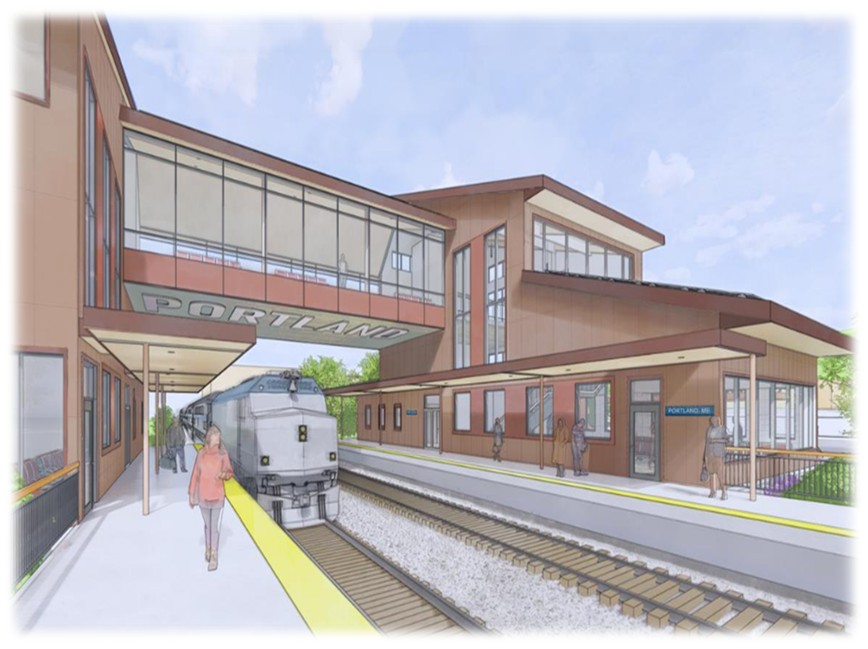
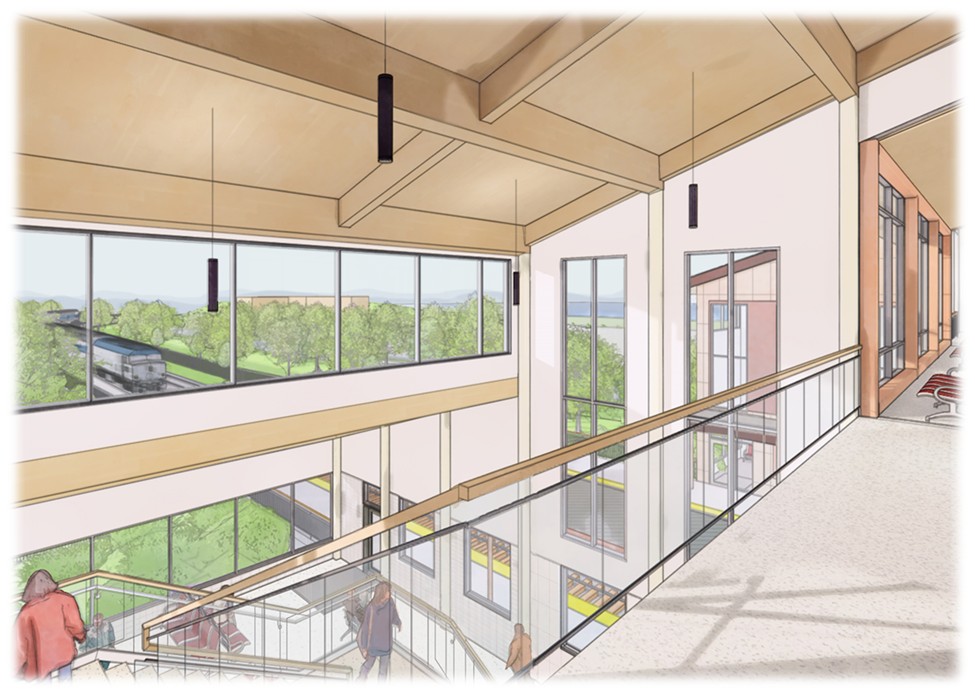
The new station will have two passenger platforms, allowing northbound and southbound trains to meet simultaneously, increasing reliability and improving schedule flexibility. The current 15-minute stop will be reduced to 2 minutes at the new location. At the new location, the current 50 minute travel time between Brunswick and Portland will be reduced to 33 minutes.
The platforms will be connected by an elevated pedestrian bridge which will provide direct access to both the Mercy Campus and Fore River Parkway, as well as the Maine Medical Center shuttle, St. John Street and the Congress Street corridor. The facility will have passenger waiting and ticketing areas and restrooms with parking planned on the St. John Street.
The new station location is currently served by METRO Bus Route 1 and BSOOB Bus Route 60. NNEPRA is collaborating with local transit and intercity bus providers to improve and enhance connectivity to the Downeaster when the new station is complete, including connectivity to the Portland Transportation Center and Concord Coach Lines.
A New Station is Critical to Passenger Rail Service Improvement and Growth
The current Portland Downeaster station at the Portland Transportation Center (PTC) on Thompson’s Point is located on a branch line about 1 mile from the CSX mainline. This requires trains (and passengers) travelling between stations north and south of Portland to make time-consuming reverse moves in and out of the station, adding approximately 15 minutes to each trip. This extra time makes the Downeaster less competitive than other modes of travel and hinders ridership growth while increasing labor and fuel costs. These movements also delay freight and passenger trains on the mainline, limit schedule flexibility, and prevent additional frequencies or future connecting services.
NNEPRA analyzed the cumulative impacts of the additional train moves through Fiscal Year 2024:
Of the 598,000 passengers that rode the Downeaster in FY24, approximately 133,000 riders collectively spent more than 33,000 hours on trains backing in and out of the PTC.
This maneuver resulted in an additional 3,650 hours of crew time and consumed 8,600 more gallons of fuel than would be required with a mainline station.
These impacts resulted in approximately $1.1M in additional costs to passengers and the Downeaster service.
The new station will be located on the CSX mainline and will only require a 2-minute station stop, similar to other Downeaster station stops between Maine and Massachusetts, reducing trip time by approximately 13 minutes.
How was the Site Selected
In 2019, MaineDOT, in cooperation with NNEPRA, Concord Coach Lines, the City of Portland, Greater Portland Metro and GPCOG conducted a study to evaluate the benefits and challenges associated with the current station location on Thompson’s Point, and opportunities for relocation on the mainline. The Executive Summaryconcluded that MaineDOT would support NNEPRA in evaluating a new station on the railroad mainline between Congress Street and the Veterans Memorial Bridge Overpass.
Later that year, NNEPRA contracted with VHB to initiate a detailed study process to evaluate siting options for relocating Portland Station along the Mainline, as recommended by the 2021 MaineDOT Study. The Alternatives Analysis was conducted in accordance with the project planning process outlined in the Federal Railroad Administration (FRA) Guidance on Development and Implementation of Railroad Capital Projects. The Portland Train Station Relocation Planning Report was published in December 2024.
Portland Station relocation was included in the 2023 Maine State Rail Plan (MSRP) passenger rail investment program. The MSRP forecasted that the increase in ridership due to travel time reductions through Portland and the relocation of the station to a more walkable location was projected to be 66,000 riders annually.
NNEPRA’s Alternatives Analysis considered three locations:
Site 1: North of Congress St (McDonald’s area)
Site 2: South of Congress St (near Union Station Plaza)
Site 3: Adjacent to Northern Light Mercy Hospital near St. John Street
Each site was evaluated against the same criteria:
Ability to support safe and efficient train operations
Availability of property to support parking needs
Vehicular, pedestrian, bike and transit connectivity
Proximity to employment centers and demand generators
Compatibility with land use and development initiatives
Ability to support future rail service expansions
The Analysis included extensive public and stakeholder outreach including:
Ongoing engagement with Amtrak, CSX, Maine Health, Northern Light Mercy Hospital (Mercy), Greater Portland Metro, Greater Portland Council of Governments (GPCOG) / Portland Area Comprehensive Transportation System (PACTS) and Portland City staff
Presentations and discussions at NNEPRA Board Meetings and other public state/regional committee meetings
Two virtual public meetings with extended comment periods
Comments made at the two public meetings and in the public comment portal reflected overwhelming public support for Site 3
The Analysis concluded that:
Site 1 is not viable due to location and track infrastructure limitations.
Site 2 was not selected as the preferred location due to multiple site and rail operational challenges, including:
Site 2 presents significant operational challenges for freight and passenger trains due to the close proximity to the Congress Street grade crossing.
Property is not available for train station development:
Site 2 abuts the Cumberland County Jail to the west. Portions of a station would be located partially on or directly abutting the County Jail. The County has submitted a letter in opposition to siting the station immediately adjacent to the jail.
Site 2 is primarily owned by Maine Health. A train station would negatively impact the employee shuttle and would limit Maine Health’s ability to expand to accommodate the community’s increasing healthcare needs.
Site 3 was selected as the location which best meets project needs for numerous reasons:
Site 3 is supported by Amtrak, CSX, MaineDOT, and the majority of the public who provided site selection comments during and following the first public meeting.
Site 3 creates no new impacts to grade crossings and requires the least amount of costly infrastructure improvements.
Site 3 is the only site that provides direct access to the Mountain Division branch, which preserves the opportunity for future passenger rail development to the west.
Site 3 is the only site with direct access to maintenance facilities on the Mountain Division and best supports train operations.
Site 3 offers direct access to more jobs than Site 2 and the current station.
Site 3 is the only site which can provide varying levels of multimodal access from the platforms on both sides of the tracks, connecting two areas of the city currently bifurcated by the railroad.
Site 3 best improves pedestrian/bike connectivity by connecting St. John Street to the Fore River Parkway, and being located between the major throughways of West Commercial Street and Congress Street.
Site 3 provides connectivity to the Fore River Parkway and the opportunity for future collaboration with Mercy Hospital.
Site 3 is comprised of land where acquisition is possible.
Site 3 provides the most direct access to the Concord Coach Lines intercity bus station via the Fore River Parkway.
Site 3 complies with local zoning code and land use, and supports Transit Oriented Development (TOD) opportunities within 0.5 miles of the station site.
In June 2024, the NNEPRA Board of Directors voted to support Site 3 based on the technical findings of VHB; input from key stakeholders such as CSX, MaineDOT, and Amtrak; public feedback from a public meeting; and written comments received through the public portal.
In addition to best supporting safe railroad operations, Site 3 will connect St. John Street and the Fore River Parkway via a pedestrian bridge over the railroad and provide direct access to the Northern Light Mercy Hospital campus, Maine Medical Center shuttle, and several bus connections (i.e., GP Metro, BSOOB) and enhance bike and pedestrian connectivity.
Following the Board vote, NNEPRA held a second public meeting to determine whether the public supported the Board decision. The majority of comments specific to site selection that were received at the second meeting supported the Board’s selection of Site 3.
A Portland Train Station Relocation Planning Report dated December 5, 2024, was prepared and submitted to NNEPRA (Final Report) summarizing the Alternatives Analysis process, findings, and recommendations. The Final Report included a description of analysis conducted prior to the vote of the NNEPRA Board, noted the Board’s action in August 2024, and included subsequent information received after the Board vote. The additional information received after the Board vote confirmed the earlier findings in support of Site 3 and the Board declined to take any action to modify its earlier support for Site 3.
Project Timeline
Date
Goal
December 2024
Portland Train Station Relocation Planning Report Published
August 13, 2024 thru August 27, 2024
Formal Public Comment Period
August 13, 2024
Virtual Public Meeting
April 25, 2024 thru May 10, 2024
Formal Public Comment Period
April 25, 2024
Virtual Public Meeting
Winter 2024
Project planning with Maine DOT, public, and stakeholder involvement
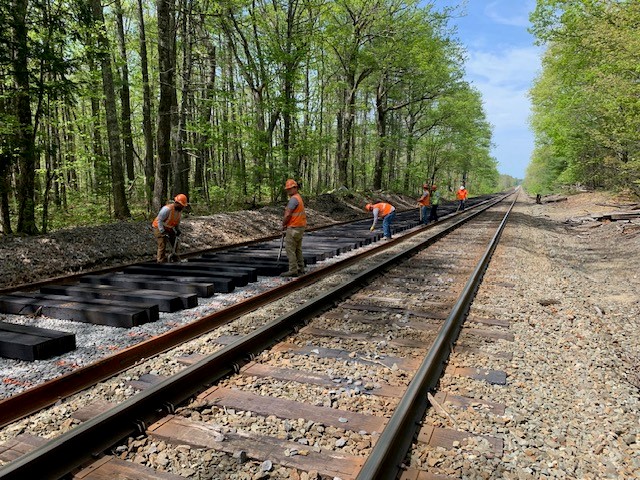
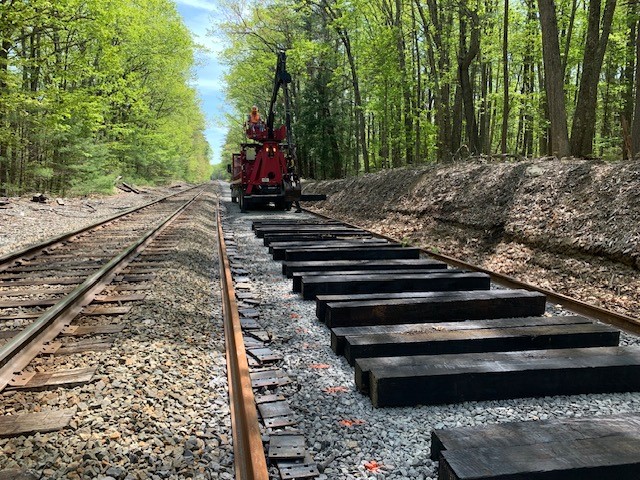
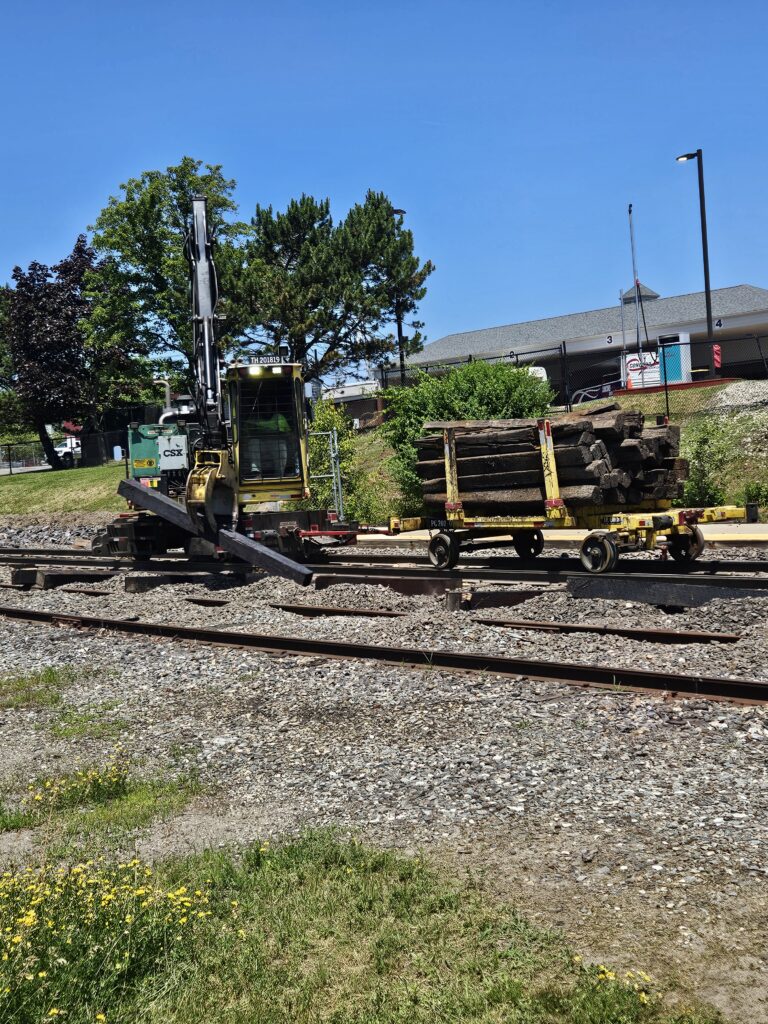
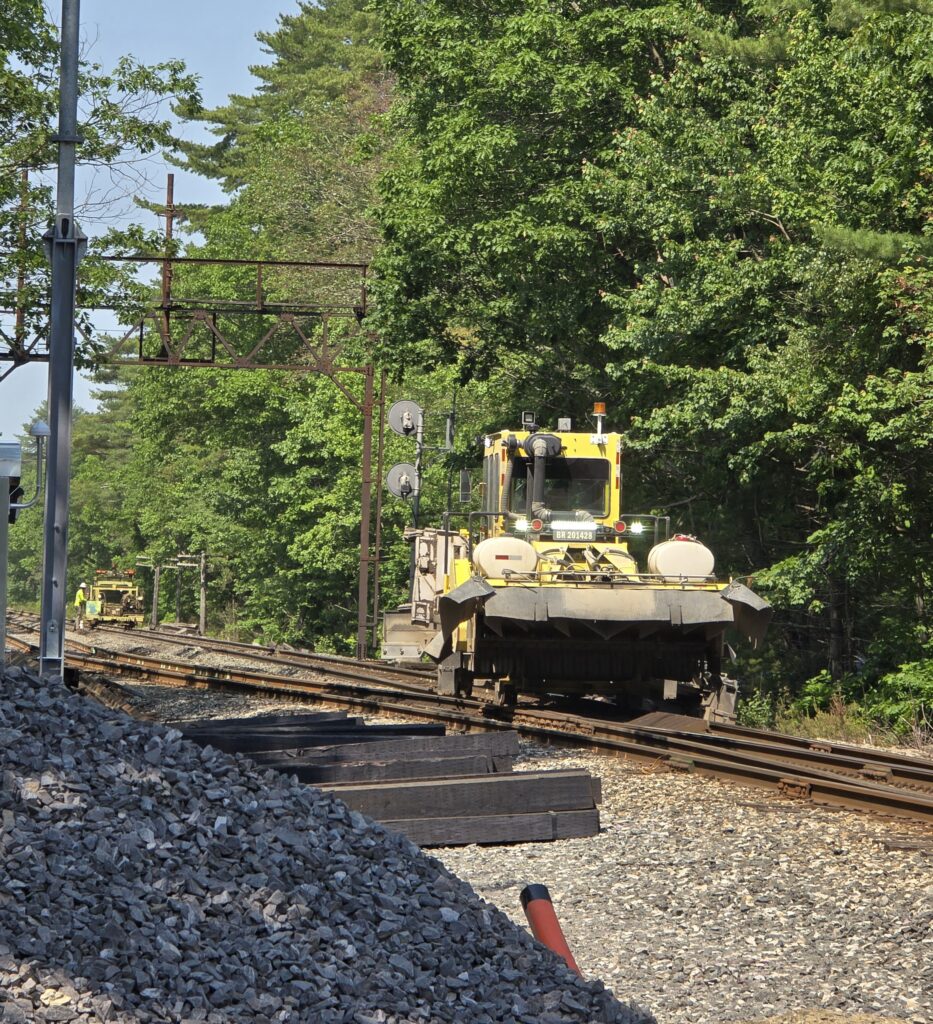
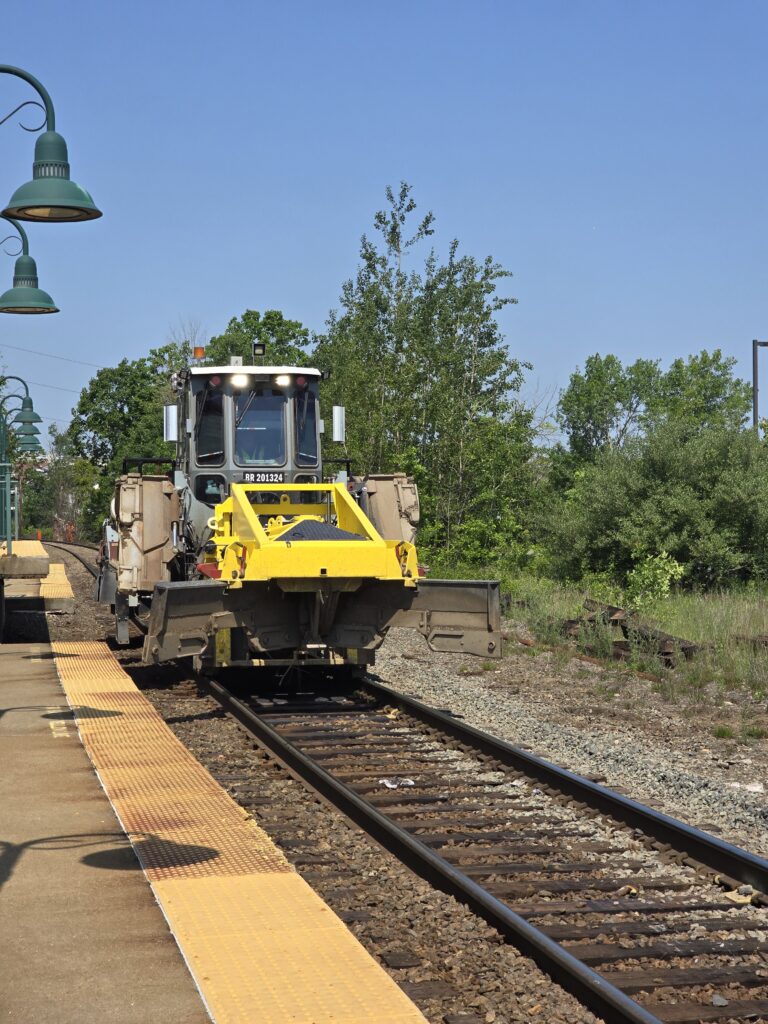
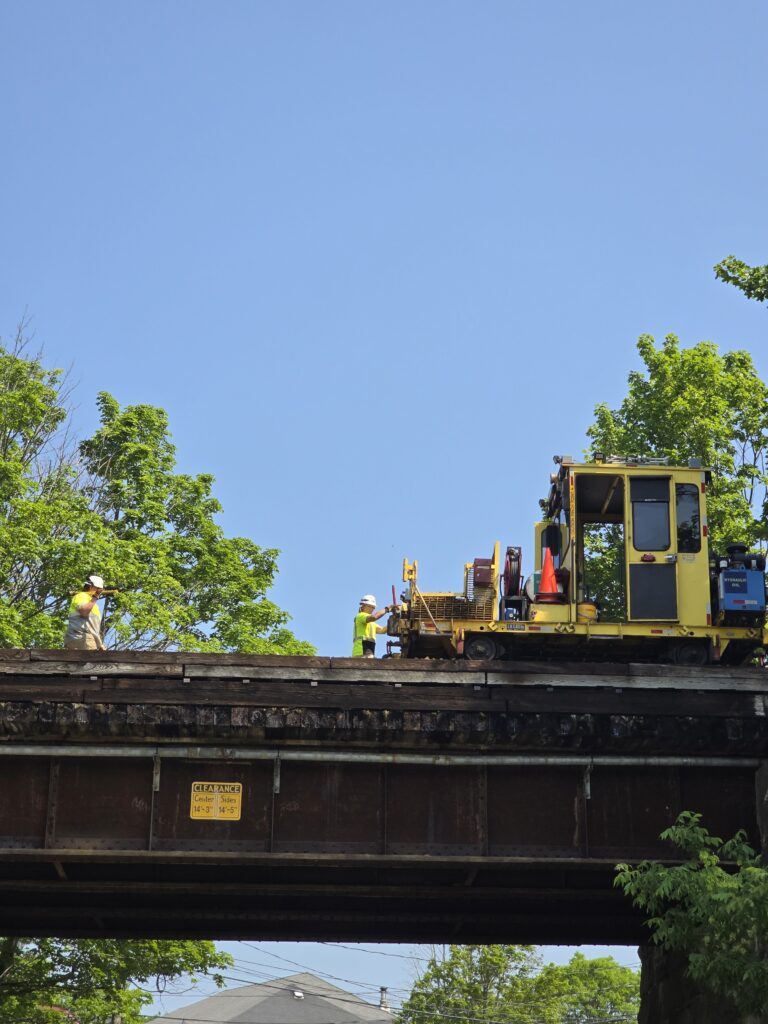
This important maintenance Projectwill replace approximately 124,000 crossties between Brunswick, ME and the Massachusetts state line.
What are crossties?Crossties, also referred to ‘railroad ties’ or simply ‘ties’, are the rectangular slats that lay perpendicularly under the rail along the railroad. Crossties hold the rails upright, distribute the weight of trains over the tracks and ballast (crushed rock), and help maintain track alignment.
Additional components of the Project include 124-miles of track surfacing, distributing approximately 500 tons of ballast per track mile, and replacing 1,290 switch timbers at 43 switches along the CSX Freight Main Line.
This investment will improve the overall condition of the Downeaster Corridor, enhancing the long-term reliability of both the Amtrak Downeaster and CSX freight services.
During track work, some Downeaster trains may experience service modifications or delays. For the latest updates, please visit amtrakdowneaster.com.
Date
Milestones
April 2025
Tie Replacement Begins
May 2025
CSX Replaces Over 50,000 Railroad Ties
July 29, 2025
Tie Replacement completed
Fall 2025
Complete cross tie installation, switch timber installation, insulated joint installation, and scrap tie pick-up.
Project Budget
The total project budget is $34,365,000. Eighty percent of the total is being paid for through the Fed/State Partnership Grant awarded to NNEPRA by the Federal Railroad Administration and matched by a 20 percent contribution from CSX .
Project Photos-
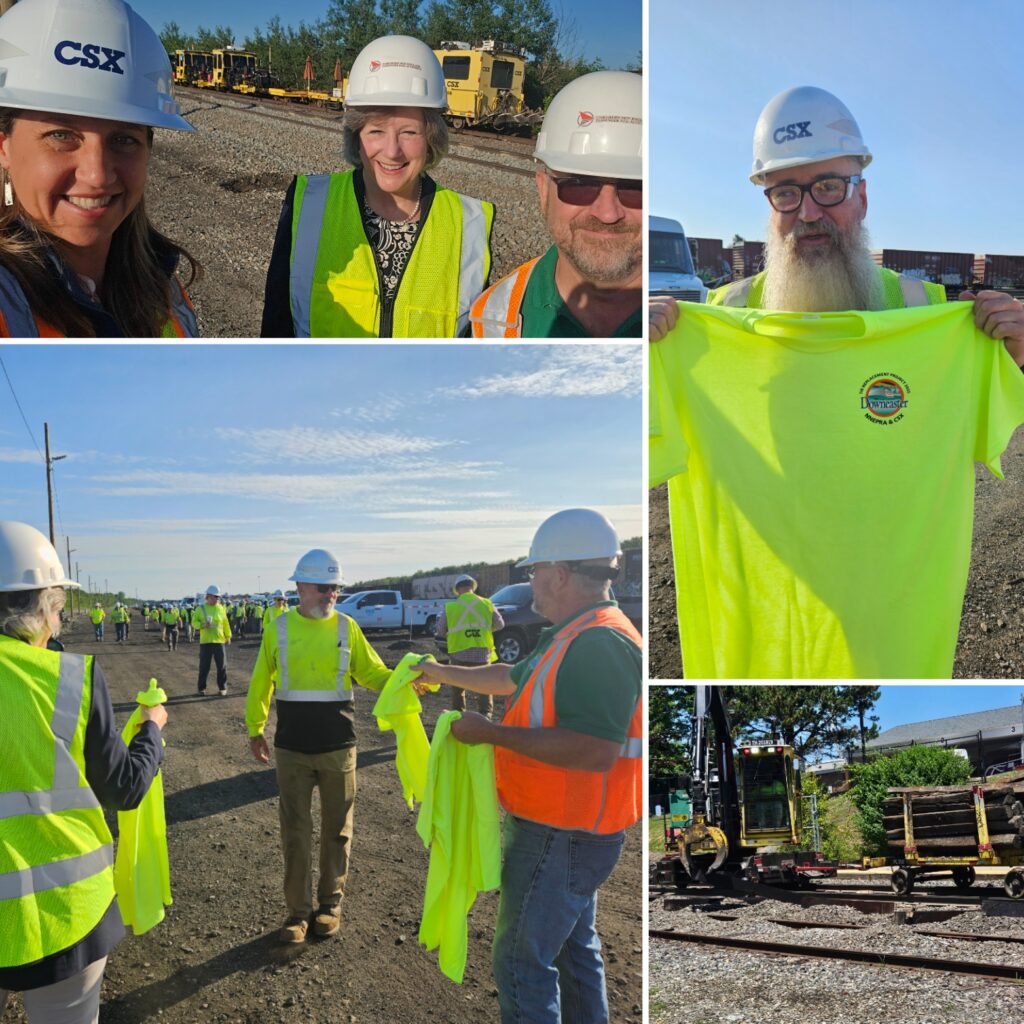
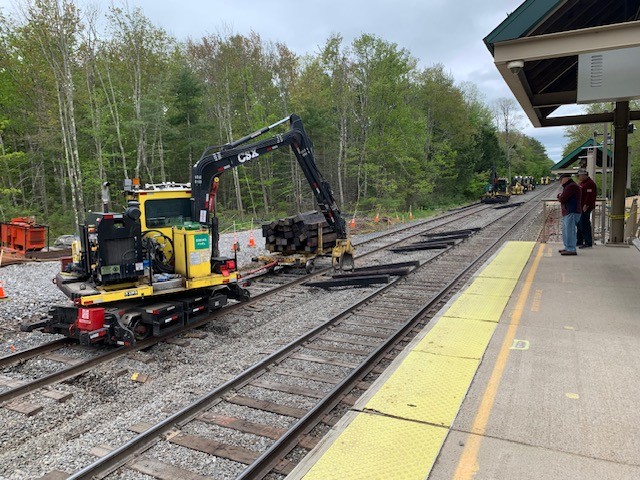
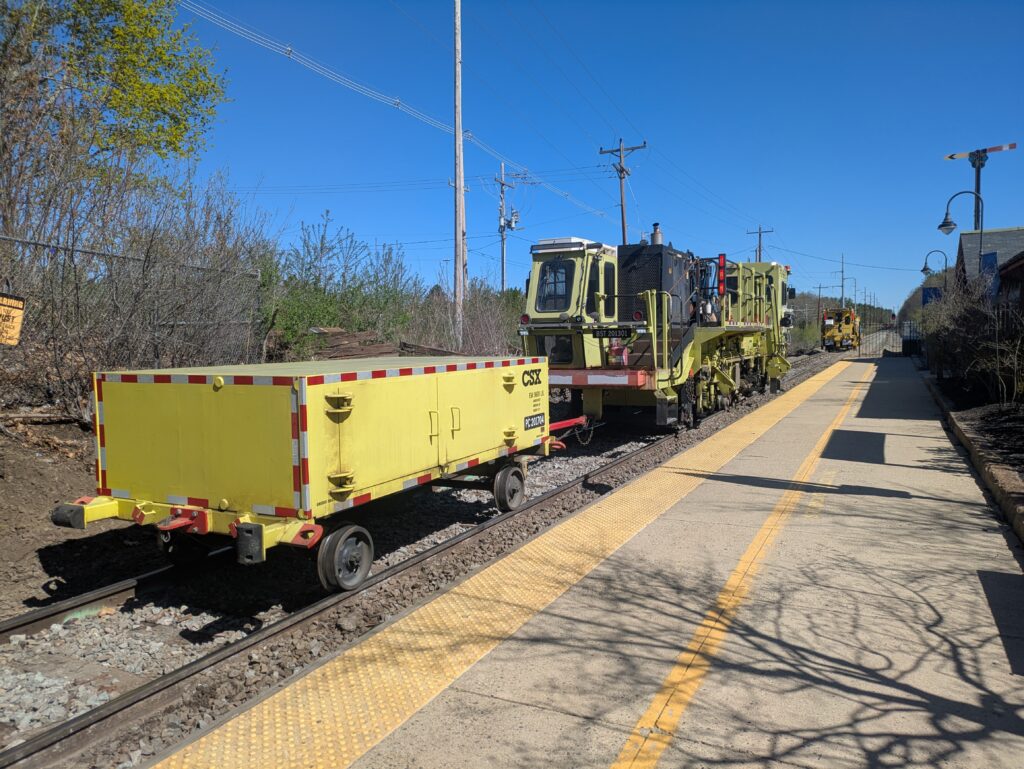
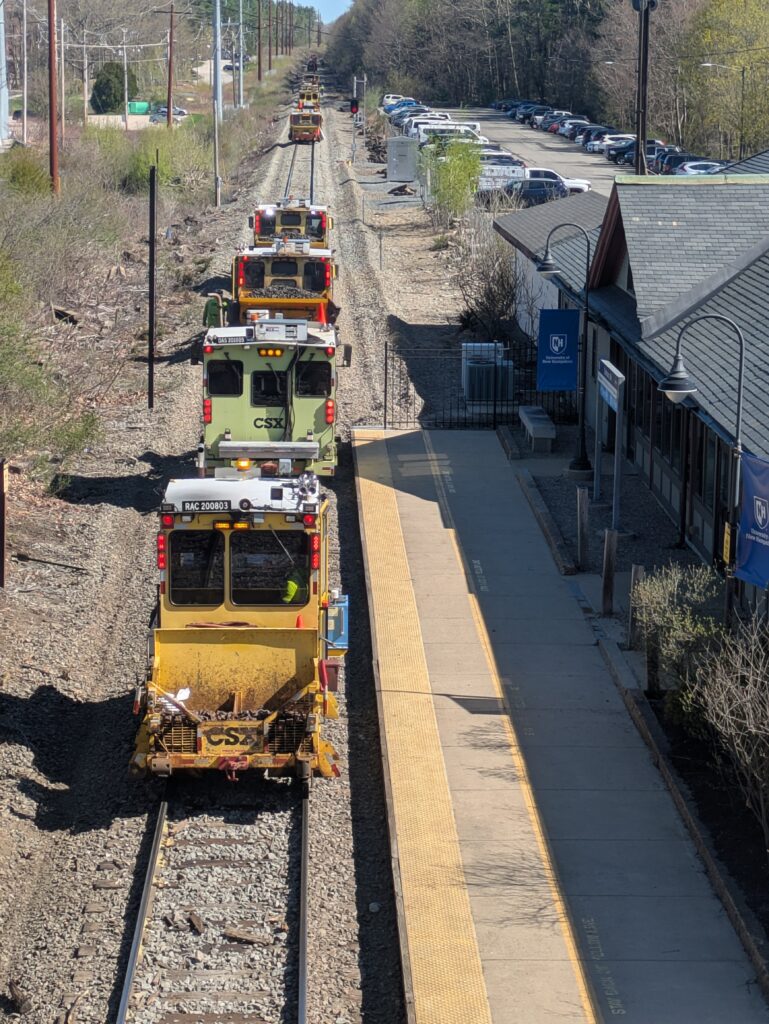
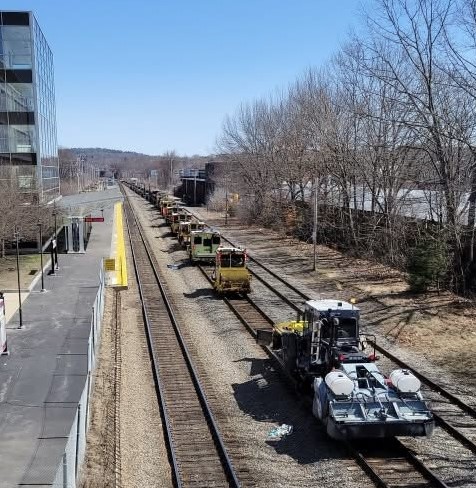
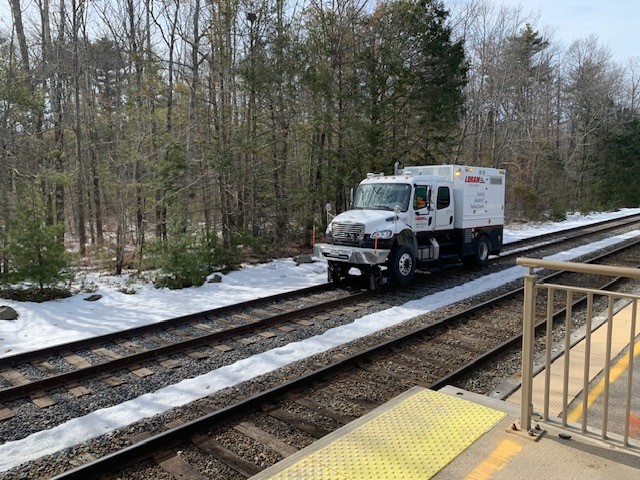
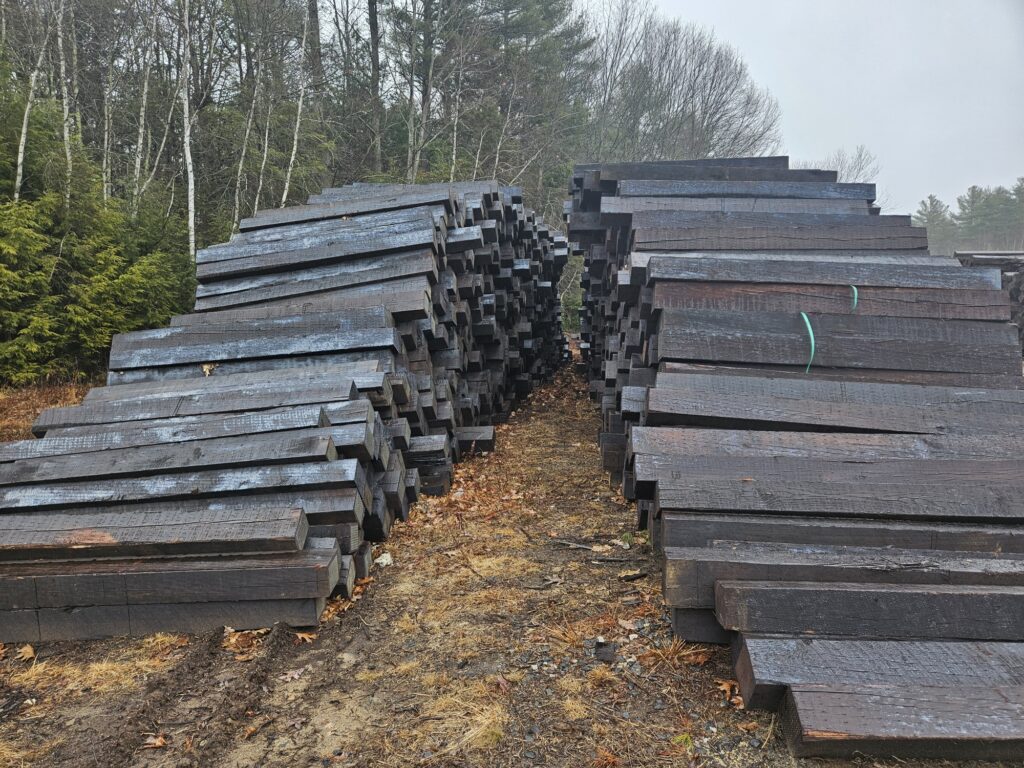
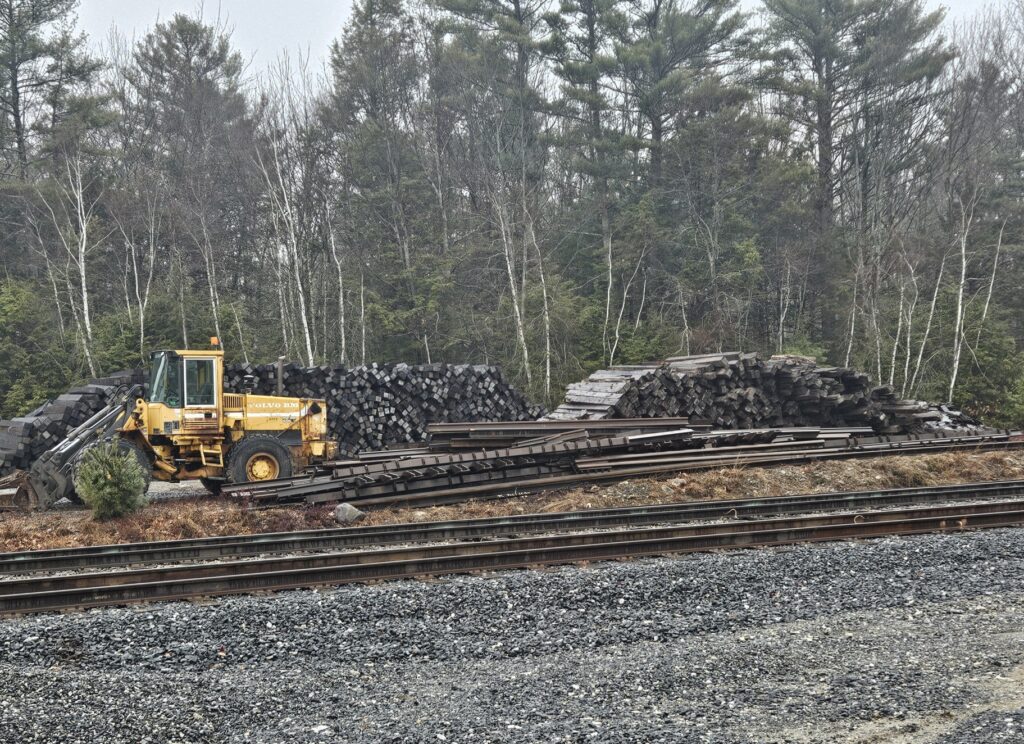
July 2025-A thank you to the hardworking tie replacement crews!July 2025- CSX at work in Portland, ME.June 2025- CSX at work in Ocean Park, ME.June 2025- CSX at work in Saco, ME. June 2025- CSX at work in Saco, ME.May 2025- CSX at work in Wells, ME.April 2025- CSX at work in Durham, NH.April 2024- CSX at work in Durham, NH.April 2025- 32 pieces of tie replacement equipment arrives in Lawrence, MA.March 2025- Track inspection vehicle scans railroad ties.March 2025- A fresh stockpile of railroad ties, set to enhance the Downeaster routeMarch 2025- A fresh stockpile of railroad ties, set to enhance the Downeaster route
In partnership with the Town of Falmouth and the Maine Turnpike Authority, NNEPRA is providing guidance, input and funding to include the option for a train platform in the town’s West Falmouth Crossing Master Plan.
What to expect in the coming months.
Date
Goal
TBD
Continued Development of Master Plan Update
Project Budget
The town of Falmouth is the lead agency for the Study.